

The Complete Engineering Guide
CNC machining

Ready to get your parts machined?
Get instant CNC quote
SHARE THIS ARTICLE

SHARE THIS ARTICLE
Learn all you need to know about CNC machining in 25 minutes or less. Whether you are an experienced design engineer or just getting started with CNC, this guide is for you.
Part 1
The basics
What is CNC machining? What are the different types of CNC machines? How do they work?
In this section, we answer all these questions and we compare CNC machining to other manufacturing technologies to help you find the best solution for your application.
What is CNC machining?
CNC (Computer Numerical Control) machining is a subtractive manufacturing technology: parts are created by removing material from a solid bar (called the blank or the workpiece) using a variety of cutting tools.
This is a fundamentally different way of manufacturing compared to additive (3D printing) or formative (Injection Molding) technologies. The material removal mechanisms have significant implications on the benefits, limitations and design restrictions of CNC.
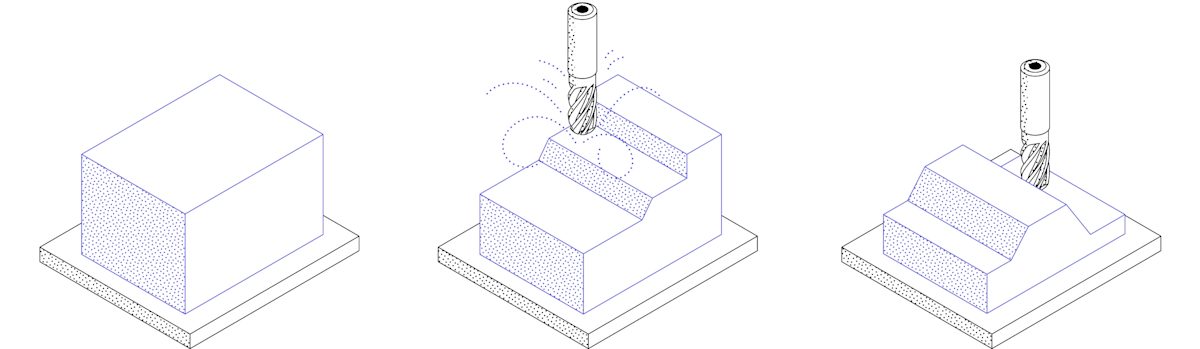
CNC machining is a digital manufacturing technology: it produces high-accuracy parts with excellent physical properties directly from a CAD file. Due to the high level of automation, CNC is price-competitive for both one-off custom parts and medium-volume productions.
The basic CNC process can be broken down into three steps. The engineer first designs the CAD model of the part. The machinist then turns the CAD file into a CNC program (G-code) and sets up the machine. Finally, the CNC system executes all machining operations with little supervision, removing material and creating the part.
A brief history of CNC machining
- Attempts to automate machining started in the 18th century. These machines were purely mechanical and powered by steam.
- The first programmable machine was developed in the late 1940s at Massachusetts Institute of Technology (MIT). It used punch cards to encode each movement.
- The proliferation of computers in the 1950s and 1960s added the “C” in CNC and radically changed the manufacturing industry.
- Today, CNC machines are advanced robotic systems with multi-axis and multi-tooling capabilities.

Types of CNC machines
In this guide, we’ll be focusing on CNC machines that remove material using cutting tools. These are the most common and have the widest range of applications. Other CNC machines include laser cutters, plasma cutters and EDM machines.
Open-loop versus closed-loop systems
In high-end industrial manufacturing, the reliability of a CNC machine often comes down to whether it uses a closed-loop or an open-loop system. Closed-loop systems use feedback sensors to constantly monitor the tool’s position. These systems correct any errors in real-time for maximum precision. This means the machine ‘checks its own work’ as it moves, ensuring the final part meets tight tolerance requirements.
In contrast, simpler open-loop systems send instructions to the motors without receiving any feedback. This lack of a ‘double-check’ makes them less reliable for complex jobs, as they cannot detect or fix small deviations during the process.
For projects that require high precision, the feedback-driven nature of closed-loop systems is what makes high-end industrial machines meet the professional standard.
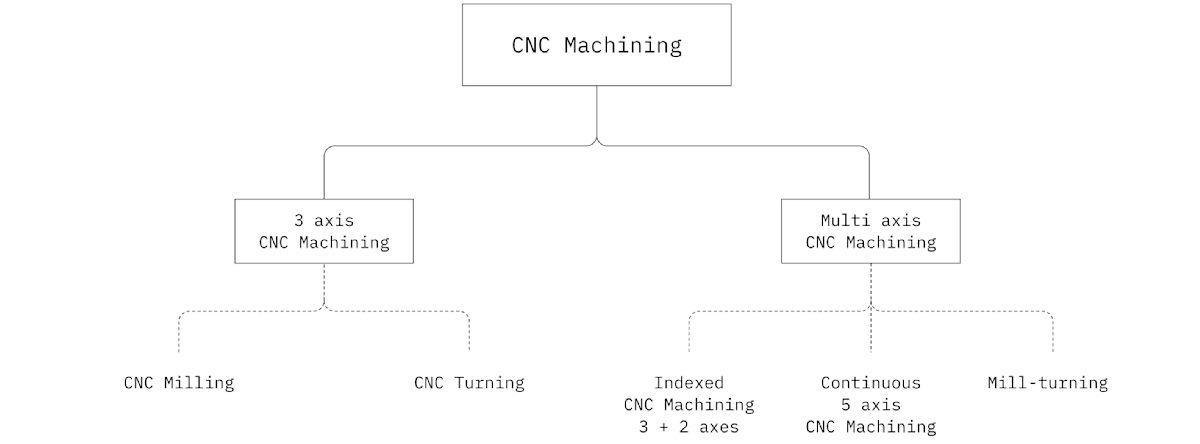
3-axis CNC machines
CNC milling and CNC turning machines are examples of three-axis CNC systems. These ‘basic’ machines allow the movement of the cutting tool in three linear axes relative to the workpiece (left-right, back-forth and up-down).
CNC milling
- The workpiece is held stationary directly on the machine bed or in a vice.
- Material is removed from the workpiece using cutting tools or drills that rotate at high speed.
- The tools are attached to a spindle, which can move along three linear axis.


CNC turning (lathes)
- The workpiece is held on the spindle while rotating at high speed.
- A cutting tool or center drill traces the outer or inner perimeter of the part, forming the geometry.
- The tool does not rotate and moves along polar directions (radially and lengthwise).

CNC lathes are extensively used, because they can produce parts at a much higher rate and at a lower cost per unit than CNC mills. This is especially relevant for larger volumes.
The main design restriction of CNC lathes is that they can only produce parts with a cylindrical profile (think screws or washers).
To overcome this limitation, features of the part are often CNC milled in a separate machining step. Alternatively, five-axis mill-turning CNC centers can be used to produce the same geometry in one step.
Learn more about CNC turning →
Explore the full range of CNC turning capabilities available on Protolabs Network →

5-axis CNC machining
Multi-axis CNC machining centers come in three variations: five-axis indexed CNC milling, continuous five-axis CNC milling and mill-turning centers with live tooling.
These systems are essentially milling machines or lathes enhanced with additional degrees of freedom. For example, five-axis CNC milling centers allow the rotation of the machine bed or the toolhead (or both) in addition to the three linear axes of movement.
However, the advanced capabilities of these machines come at an increased cost. They require both specialized machinery and also operators with expert knowledge. For highly complex or topology optimized metal parts, 3D printing tends to be a more suitable option.
Indexed 5-axis CNC milling
- During machining the cutting tool can only move along three linear axis.
- Between operations the bed and the toolhead can rotate, giving access to the workpiece from a different angle.
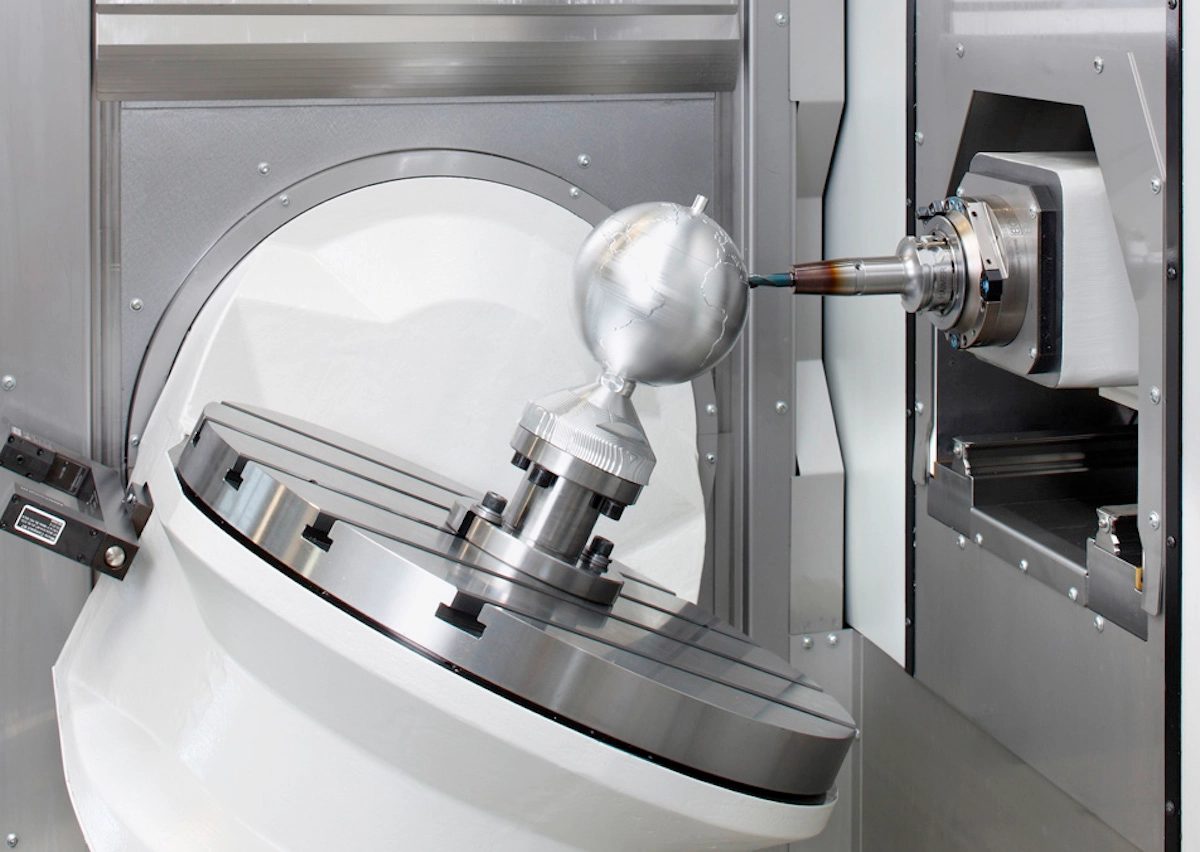
Indexed five-axis CNC milling, often called 3+2 machining, is a powerful way to handle complex parts without the high cost of full continuous movement. In this setup, the machine uses two extra axes to tilt and rotate the workpiece into a fixed position.
Once the part is locked in place, the cutting tool moves along the standard three axes to mill the features. This approach allows the tool to reach multiple sides of a component in a single setup, which reduces handling time and improves precision by keeping everything aligned. This is a smart choice for projects that need high-precision results on several faces without the complexity of a simultaneous five-axis process.
Explore the full range of 5-axis CNC milling capabilities available on Protolabs Network →
Continuous 5-axis CNC milling
- The cutting tool can move along three linear and two rotational axes relative to the workpiece.
- All five axes can move at the same during all machining operations.

Continuous five-axis CNC milling is the pinnacle of high-precision manufacturing for highly complex geometries. Unlike indexed machining, this process involves the simultaneous movement of all five axes (three linear and two rotational) while the cutting tool is in contact with the part. This allows the tool to stay tangential to the cutting surface, which is essential for creating smooth, organic shapes like turbine blades or impellers.
By maintaining a constant tool angle, it can achieve a superior surface finish and use shorter, more rigid cutting tools to ensure a tight tolerance. While it requires more advanced programming and machine time, continuous five-axis milling is the best solution for parts that demand the highest level of accuracy and intricate detail.
Explore the full range of 5-axis CNC milling capabilities available on Protolabs Network →
Mill-turning CNC centers
-
The workpiece is attached to a spindle that can either rotate at high speed (like a lathe) or position it at a precise angle (like a 5-axis CNC mill).
-
Lathe and milling cutting tools are used to remove material from the workpiece, forming the part.

Mill-turning CNC centers combine the capabilities of a lathe and a milling machine into a single, high-performance unit. In these systems, the workpiece rotates like in a traditional turning process, while specialized ‘live tooling’ can perform milling, drilling and tapping operations on the same part.
This setup is a game-changer for efficiency because it allows us to manufacture complex components from start to finish in one go. By eliminating the need to move parts between different machines, a much tighter tolerance can be maintained which ensures the perfect alignment between turned and milled features. This is the ideal solution for high-precision jobs where speed and accuracy are equally important.
Explore the full range of CNC mill-turning capabilities available on Protolabs Network →
Specialized processes: EDM and water jet cutting
CNC technology includes sometimes uses specialized methods that solve engineering challenges traditional physical cutting tools cannot handle. For extremely hard metals, Electrical Discharge Machining (EDM) uses electrical sparks to erode material with high precision.
For heat-sensitive parts, water jet cutting uses a high-pressure stream of water to cut through materials without the friction-induced heat that might warp or damage the component. These processes prove that CNC versatility extends far beyond standard milling and turning.
To summarize
- Three-axis CNC milling machines manufacture parts with relatively simple geometries with excellent accuracy and at a low cost. - CNC lathes have the lowest cost per unit, but are only suitable for part geometries with rotational symmetry.
- Indexed five-axis CNC milling machines manufacture parts with features that do not align with one of the main axes quickly and with very high accuracy.
- Continuous five-axis CNC milling machines manufacture parts with highly complex, ‘organic’ geometries and smooth contours, but at a high cost.
- Mill-turning CNC centers combine the benefits of CNC turning and CNC milling into a single system to manufacture complex parts at a lower cost than other five-axis CNC systems.
Use the table below for a rough estimate of the cost per hour of the different CNC machines. The cost is presented relative to that of a 3-axis CNC milling machine, which is typically $75 per hour.
| CNC machine type | Machining cost |
|---|---|
| CNC milling (3-axis) | $75 ( Baseline for comparison ) |
| CNC turning (lathe) | $65 ( - 15% ) |
| Indexed 5-axis CNC milling | $120 ( + 60% ) |
| Continuous 5-axis CNC milling | $150 ( + 100% ) |
| Mill-turning CNC centers | $95 ( + 25% ) |
Strengths and limitations of CNC machining
Here’s a list of the key strengths and limitations of CNC machining. Use them to help you decide whether it is the right technology for your application.
Benefits of CNC machining
CNC machining can create parts with greater dimensional accuracy than most other common manufacturing technologies. During the final finishing machining steps, material can be removed from the workpiece very accurately, achieving very tight tolerances.
The standard tolerance of most dimensions in CNC machining is ± 0.125mm. Features with tighter tolerances down to ± 0.050 mms can be manufactured and even tolerances of ± 0.025mm are possible.
CNC machined parts have excellent physical properties that are identical to the bulk material. This makes them ideal for applications where high-performance is essential. Additionally, virtually every common material with enough hardness can be CNC machined which gives engineers the flexibility to select a material with optimal properties for their application.
Limitations of CNC machining
Given that it’s a subtractive technology, machining complex geometries comes at an increased cost. It’s also restricted by the mechanics of the cutting process. Parts with complex geometry either require the use of a multi-axis CNC machining system or manual labor from the machinist (repositioning, realigning, etc).
Since a part is produced by removing material from a solid block, a cutting tool with a suitable geometry must exist. It should also be able to access all necessary surfaces. For this reason, parts with internal geometries or very steep undercuts for example cannot be machined.
Holding the workpiece securely in place is essential for CNC machining and introduces certain design limitations. Improper workholding or a workpiece with low stiffness can lead to vibrations during machining. This results in parts with a lower dimensional accuracy. Complex geometries might require custom jigs or fixtures.
Applications of CNC machining
One of the greatest strengths of CNC machining is its versatility across a wide range of applications. Here, we’ve gathered several recent examples that show how professionals are leveraging the advantages of CNC machining to achieve optimal results in diverse industrial settings. Use these as inspiration for your own projects.
Space
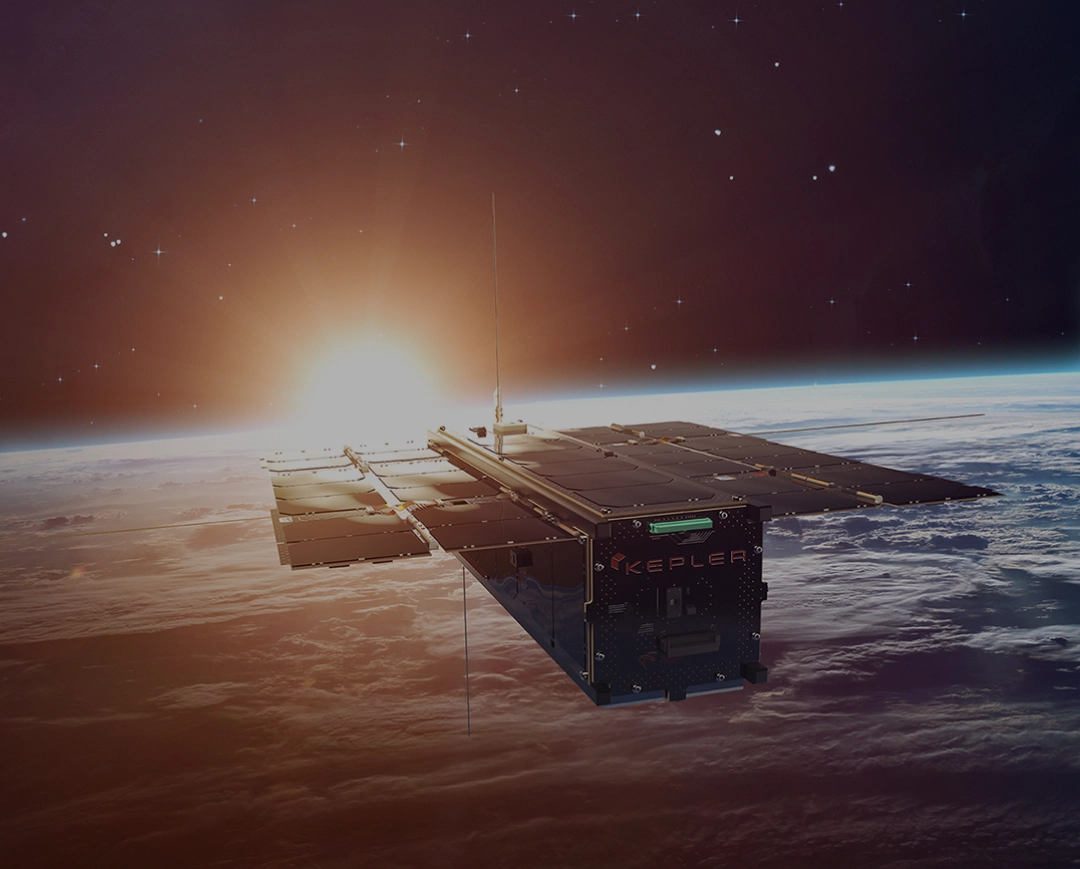
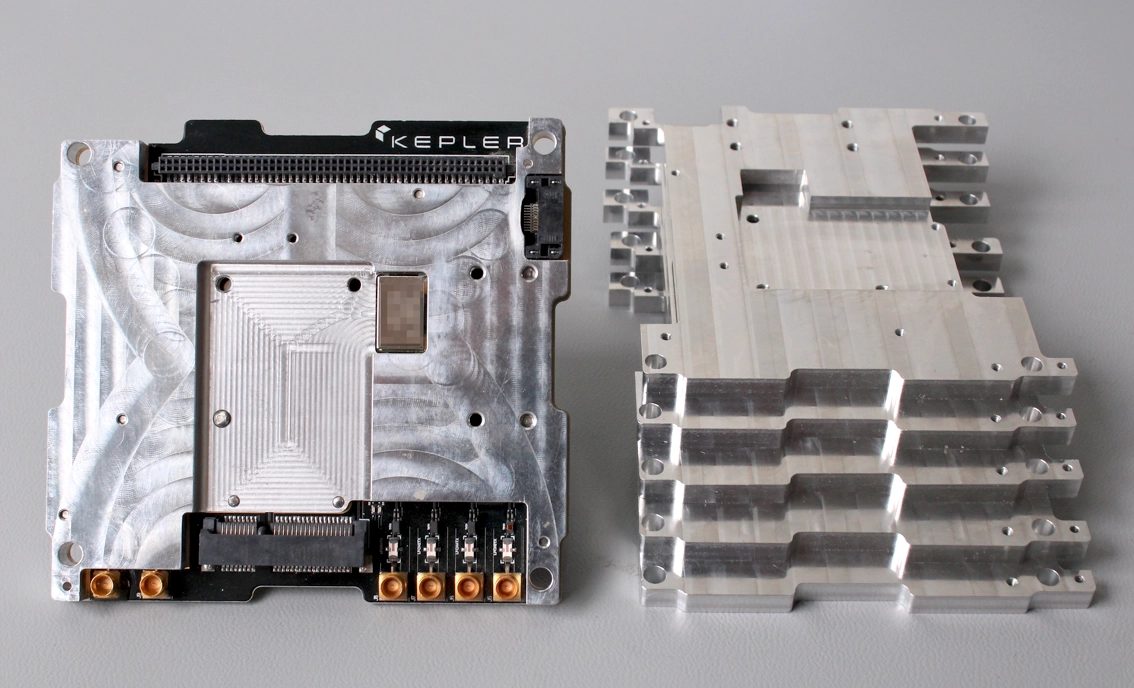
CNC machining is one of the few manufacturing processes suitable for producing parts for space applications. This is due not only to the excellent accuracy and material properties of CNC-machined parts, but also because of the wide range of surface treatments that can be applied after machining. For example, KEPLER used CNC machining and space grade materials to go from a sketch on a napkin to a satellite in space in 12 months.
Aerospace
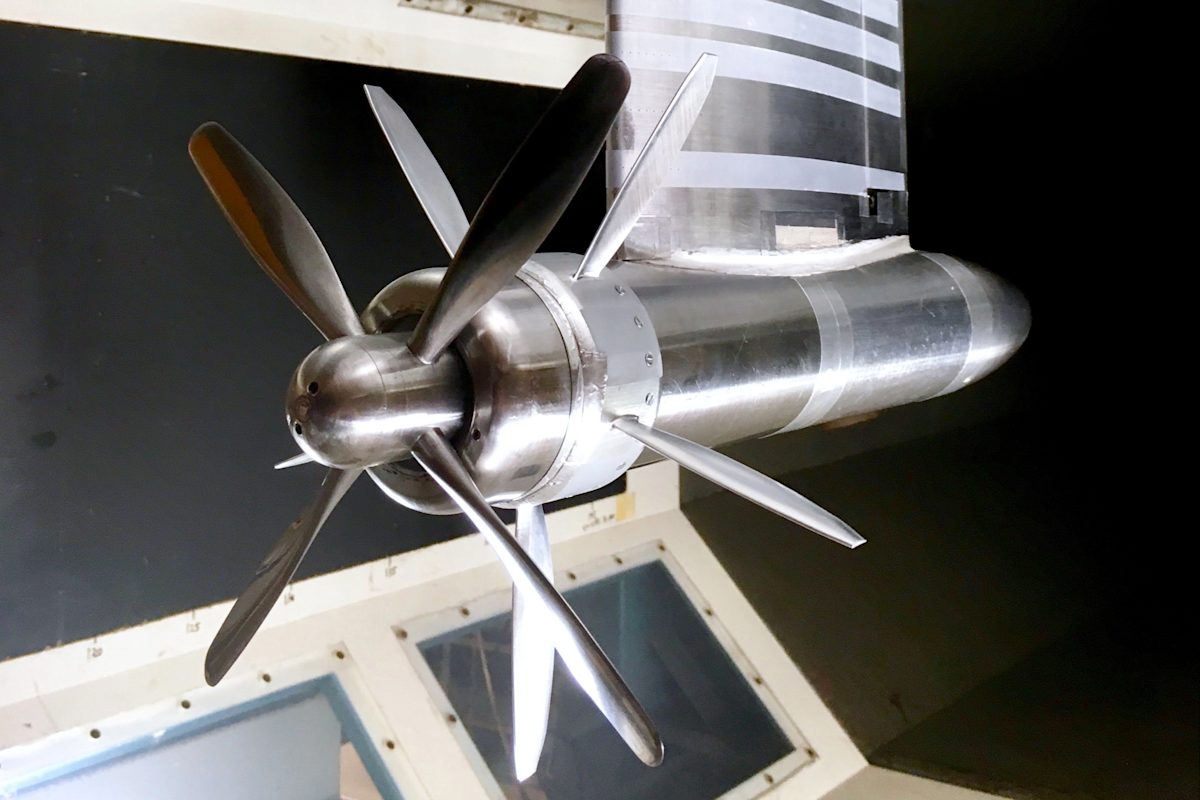
Aerospace was one of the first industries to adopt CNC machining due to its ability to produce lightweight parts with excellent mechanical properties and extremely tight tolerances. Today, CNC machining is used not only for manufacturing aircraft components, but also throughout the product development process. For example, Tomas Sinnige, a PhD researcher at Delft University of Technology, and his team used CNC machining to manufacture scaled-down versions of a prototype engine designed to improve the efficiency of modern propeller engines.
Automotive
CNC machining has applications in the automotive industry when the manufacturing of high-performance custom parts is required. For example, the Dutch company PAL-V, designs Personal Air and Land Vehicles. These are essentially the world’s first flying cars. During the development stages, they chose CNC machining to prototype and manufacture key components.

Product Design & Development
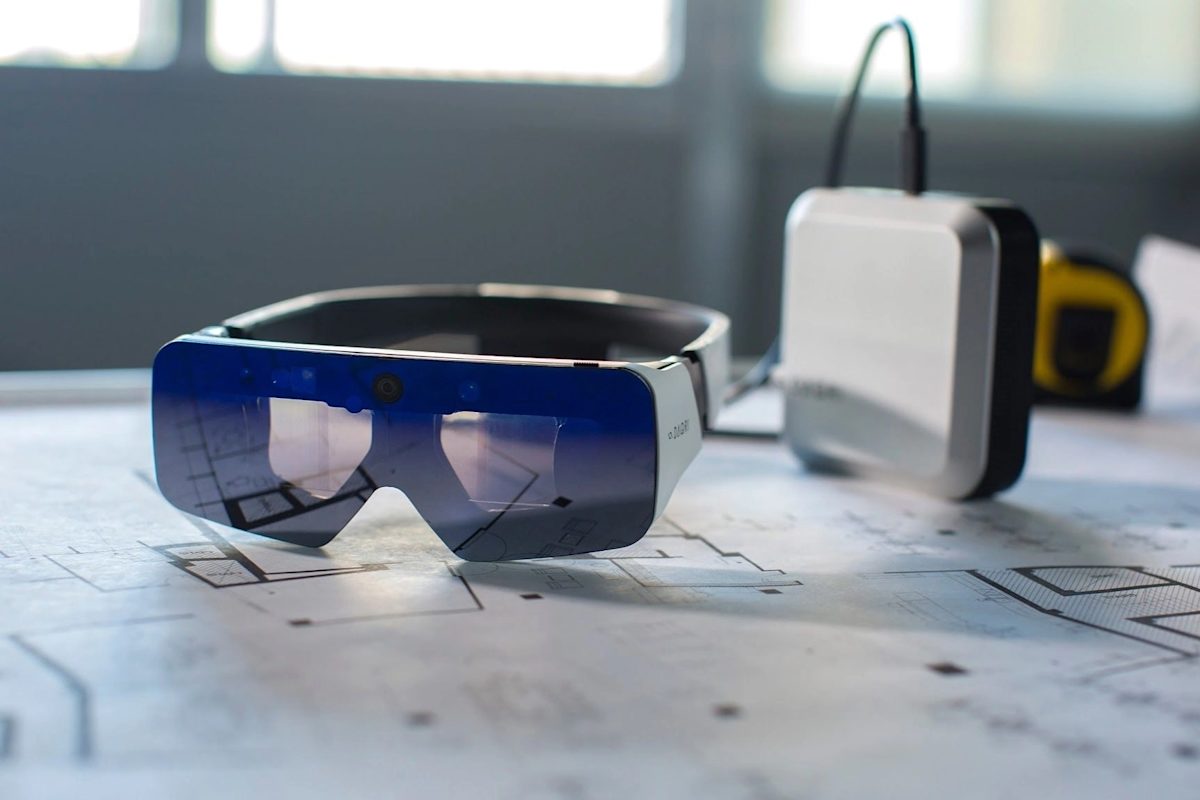
The ability to quickly manufacture custom metal parts with high dimensional accuracy makes CNC machining an attractive option for producing functional prototypes. This is especially valuable during the later stages of design and development. For example, the design team at DAQRI used CNC machining to prototype its professional augmented reality (AR) hardware. They selected the process because it offered the most cost-competitive solution cthat could produce custom metal parts with the required level of detail and precision at the small scale their designs needed.
Electrical & electronic manufacturing
CNC machining has many applications in the electrical and electronic manufacturing industry: from the prototyping of PCBs to the manufacturing of enclosures.
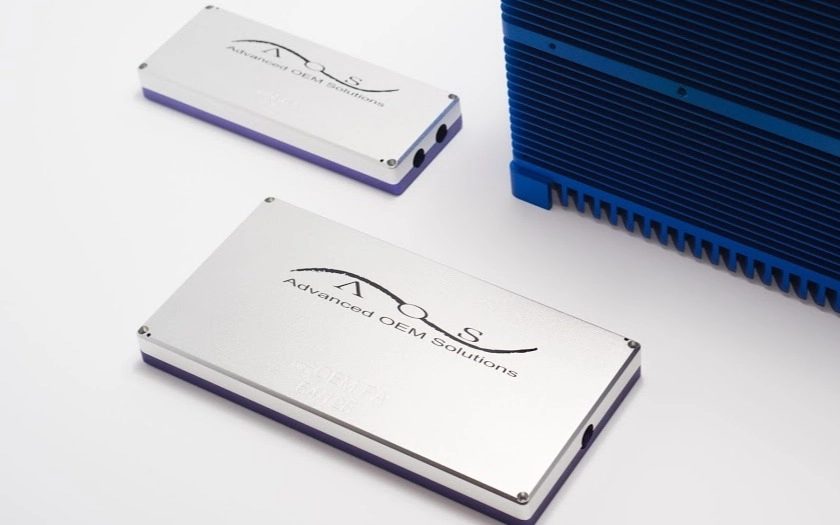
For example, TPAC uses CNC machining to manufacture enclosures for its high-power electronic sensing systems. In this case, heat dissipation and electrical insulation were the primary design requirements, making CNC-machined anodized aluminum an ideal choice for its custom one-off enclosure.
Tooling & Industrial manufacturing
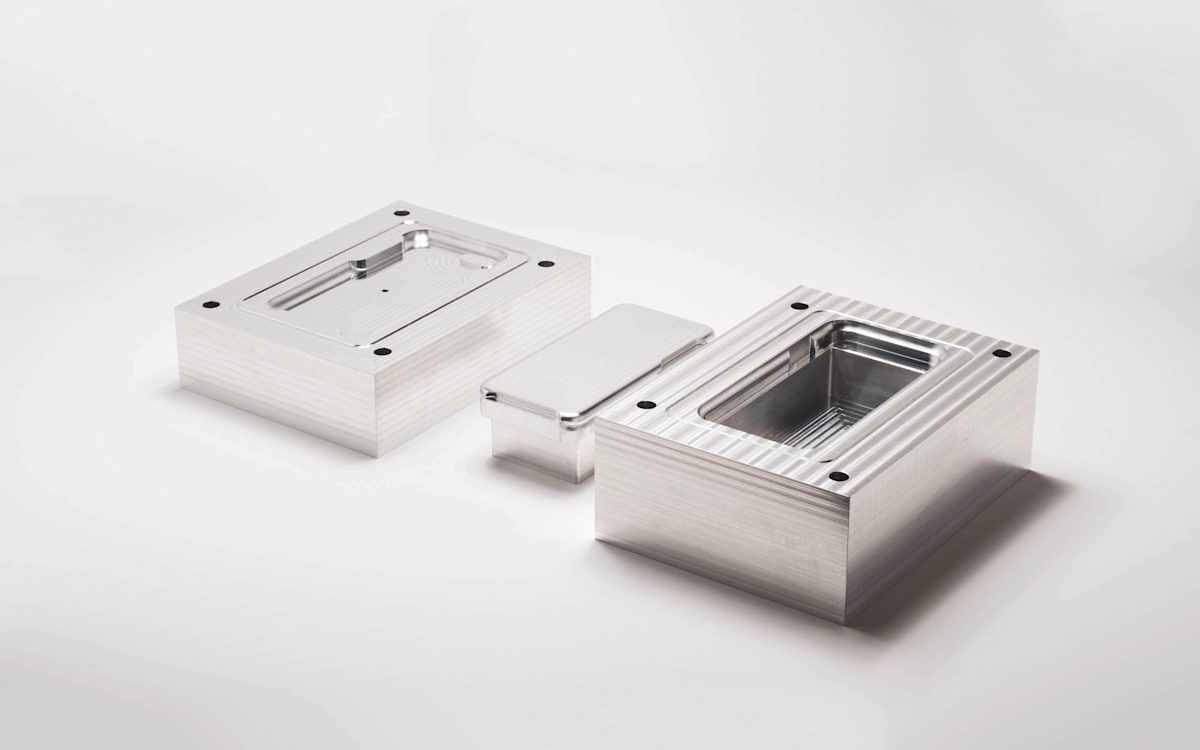
A very common industrial application of CNC machining is the fabrication of tooling for other processes. For example, the molds in Injection Molding are commonly CNC machined from aluminum or tool steel.
Precious Plastic developed a system for developing countries that turns waste plastic into iPhone cases. For this purpose, they used a low-cost manual injection molder and custom CNC machined molds.
Sports and motorsports equipment
High-performance sports and motorsports manufacturers always try to increase the performance of their products by reducing their weight.
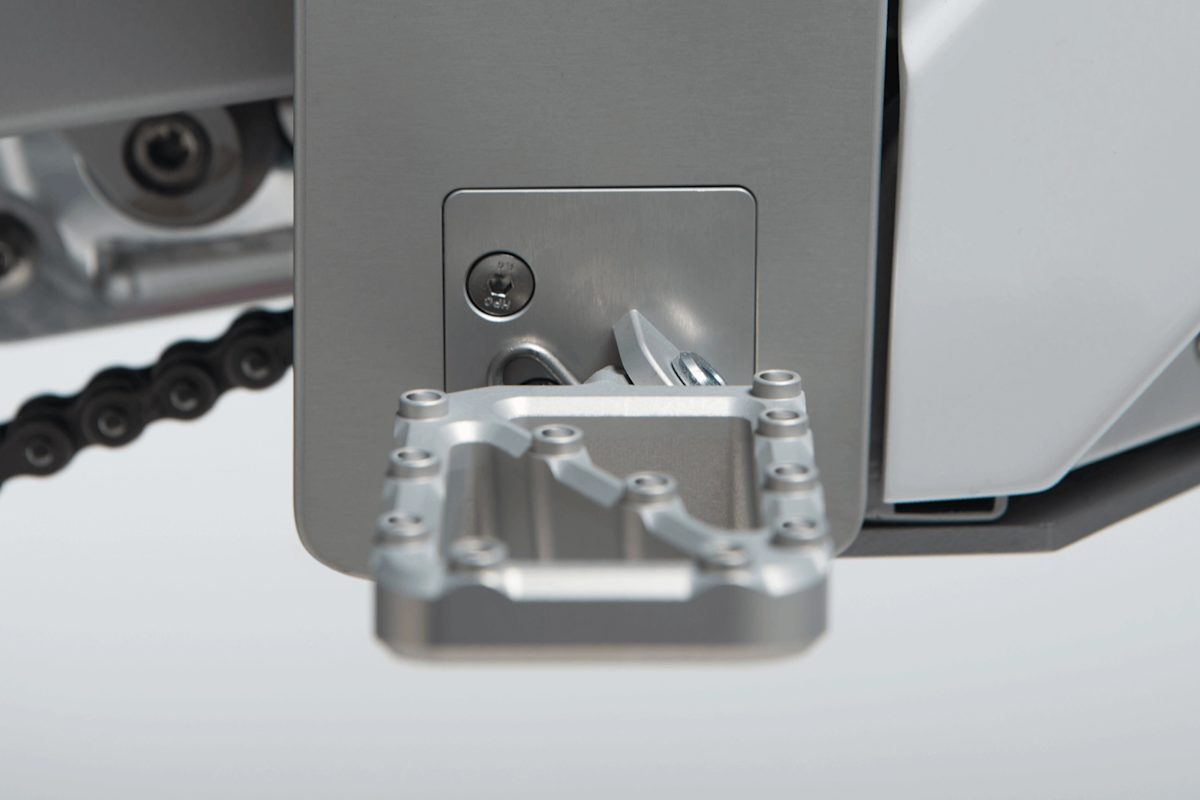
CAKE is a company that designed and developed the world’s first off-road electric motorbike. Because it was the first of its kind, every component of the motorbike was custom-made using CNC machining to achieve the required level of quality and durability.
CNC machining vs. 3D printing
Both CNC machining and 3D printing are powerful manufacturing technologies that offer distinct advantages. Understanding their unique strengths helps engineers to choose the right process for each application. When choosing between CNC machining and 3D printing, there are a few simple guidelines that you can apply to the decision-making process.
As a rule of thumb, parts with relatively simple geometries that can be manufactured with limited effort through a subtractive process should generally be CNC machined, particularly when producing metal parts. Choosing 3D printing over CNC machining makes the most sense when you need:
- A low-cost plastic prototype
- Parts with very complex geometry
- Speciality materials
To summarize:
CNC offers greater dimensional accuracy and produces parts with better mechanical properties compared to 3D printing, but this typically comes at a higher cost for low volumes and has more design considerations and best practices.
Part 2
Design for CNC machining
In less than 15 minutes, you will learn all you need to know to design parts optimized for CNC machining: from Design for Machinability rules to cost reduction tips and from material selection guidelines to surface finishing recommendations.
CNC machining design restrictions
Tool geometry
Most CNC machining cutting tools have a cylindrical shape with a flat or spherical end, restricting the part geometries that can be produced. For instance, the internal vertical corners of a CNC part will always have a radius, no matter how small a cutting tool is used.

Tool access
Surfaces that cannot be reached by the cutting tool cannot be CNC machined. This prohibits, for instance, the fabrication of parts with internal ‘hidden’ geometries and puts a limit to the maximum depth of an undercut.

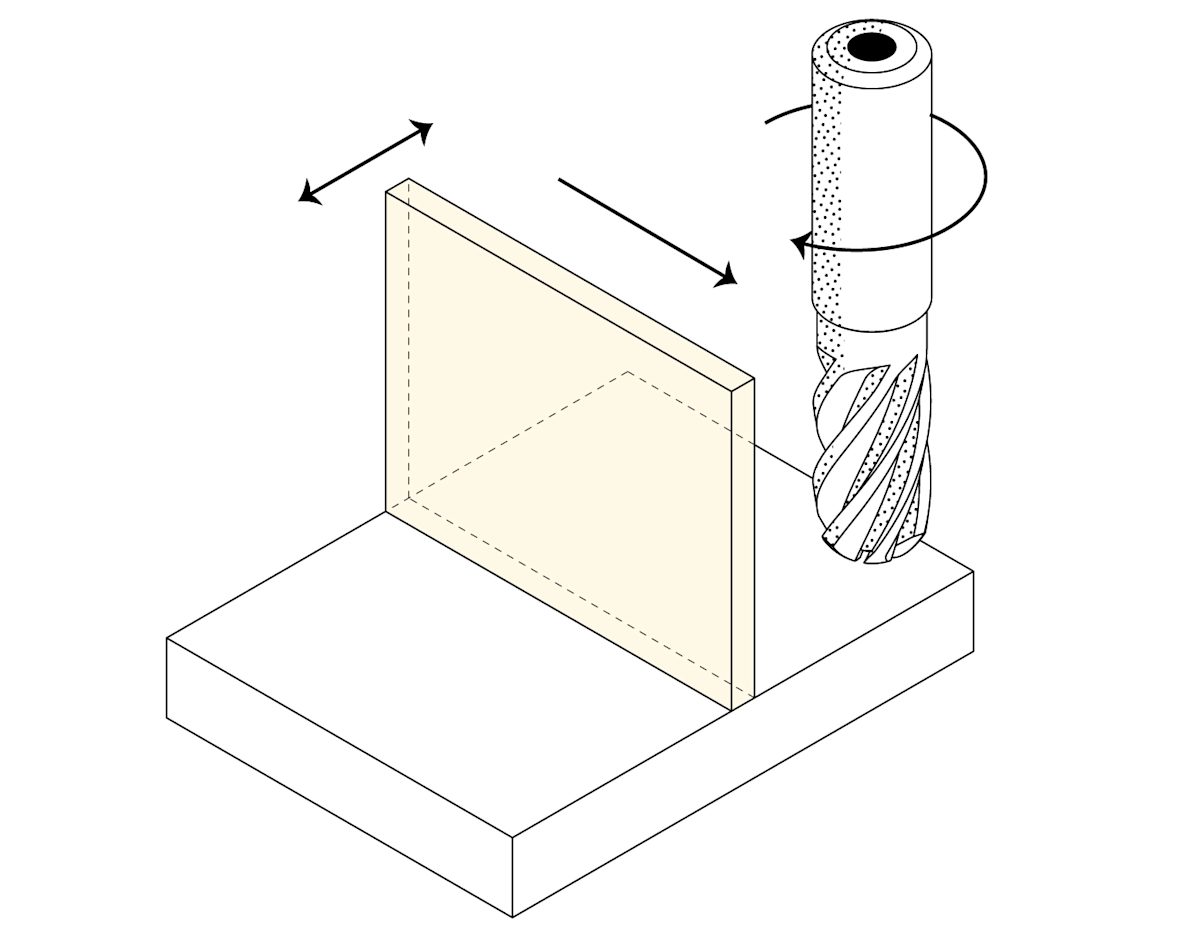
Workpiece stiffness
Due to the cutting forces and the temperatures developed during machining, it is possible for the workpiece to deform or vibrate. This limits, for example, the minimum wall thickness that a CNC machined part can have and the maximum aspect ratio of feature to depth ratio.
Tool stiffness
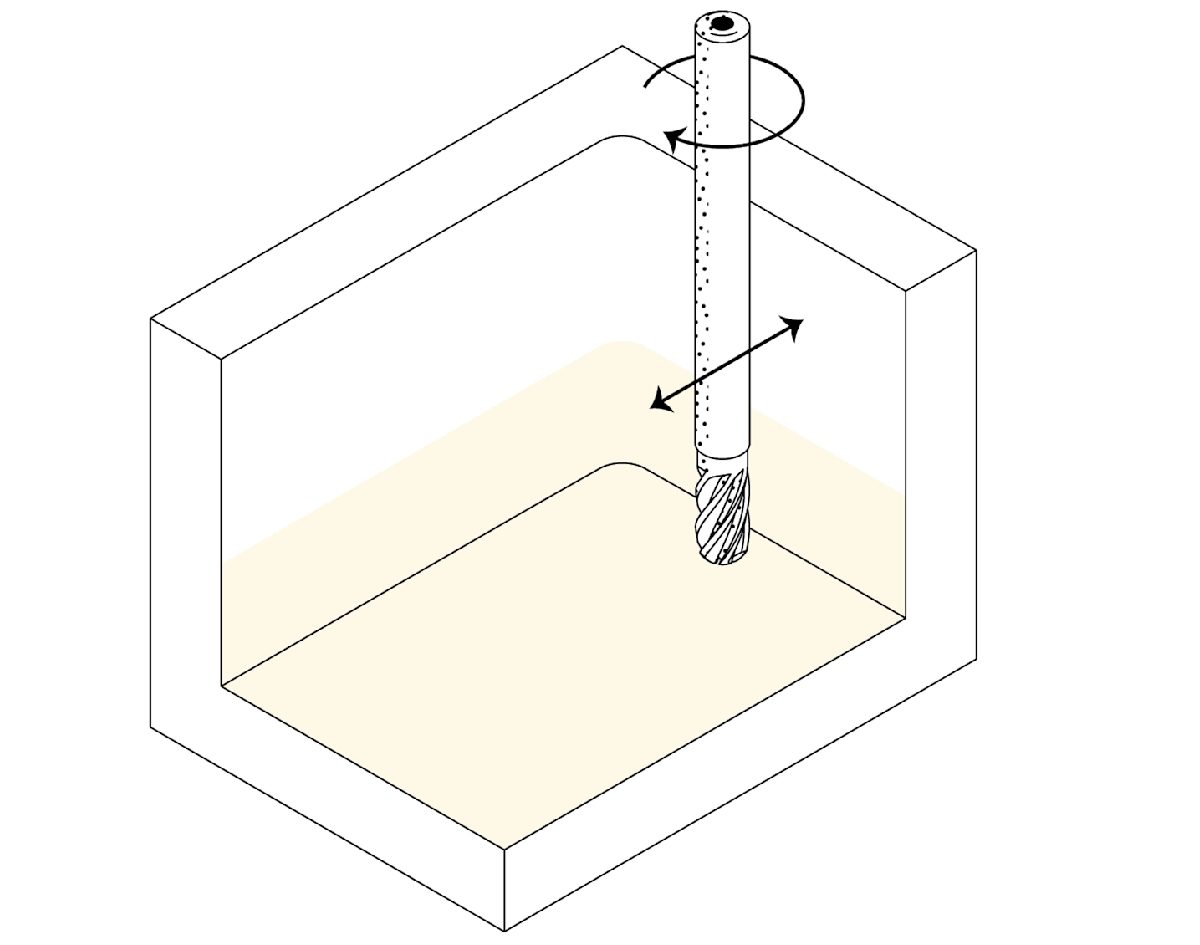
Like the workpiece, the cutting tool can also deflect or vibrate during machining. This results in looser tolerances, remakes of parts, delayed lead times and excessive scrap metal. This effect becomes more pronounced when the ratio of length-to-diameter of the cutting tool increases and is the reason why deep cavities cannot be CNC machined easily.
Workholding
The geometry of a part determines the way it will be held on the CNC machine and the number of setups required. This has an impact on the cost, but also on the accuracy of a part. For example, manual repositioning introduces a small, but not negligible, positional error. This is why five-axis versus three-axis CNC machining is preferred.

Design rules for CNC machining
In the table below, we summarise how these restrictions translate into actionable design rules.
Pockets
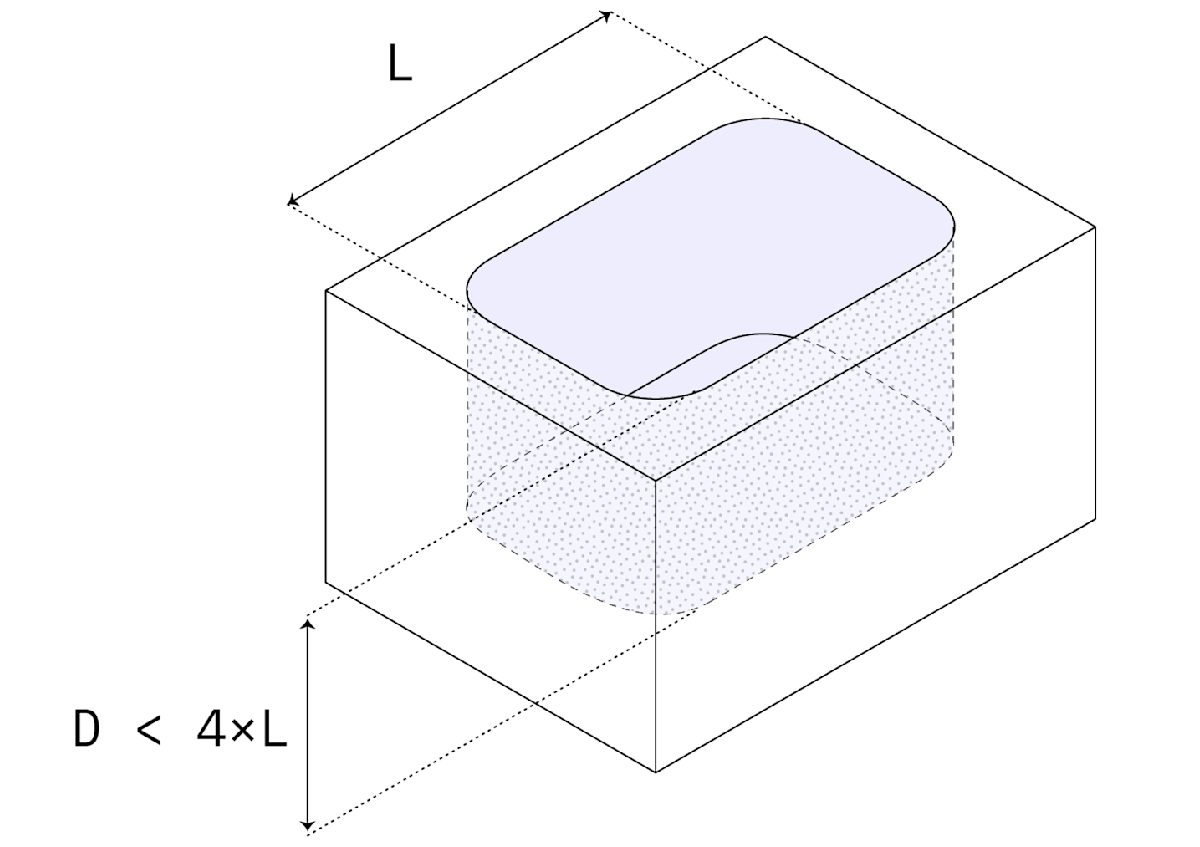
Recommended depth: 4 x pocket width
Feasible depth: 10 x tool diameter
Deeper pockets need to be machined with cutting tools with larger diameter affecting the fillets of the internal edges.
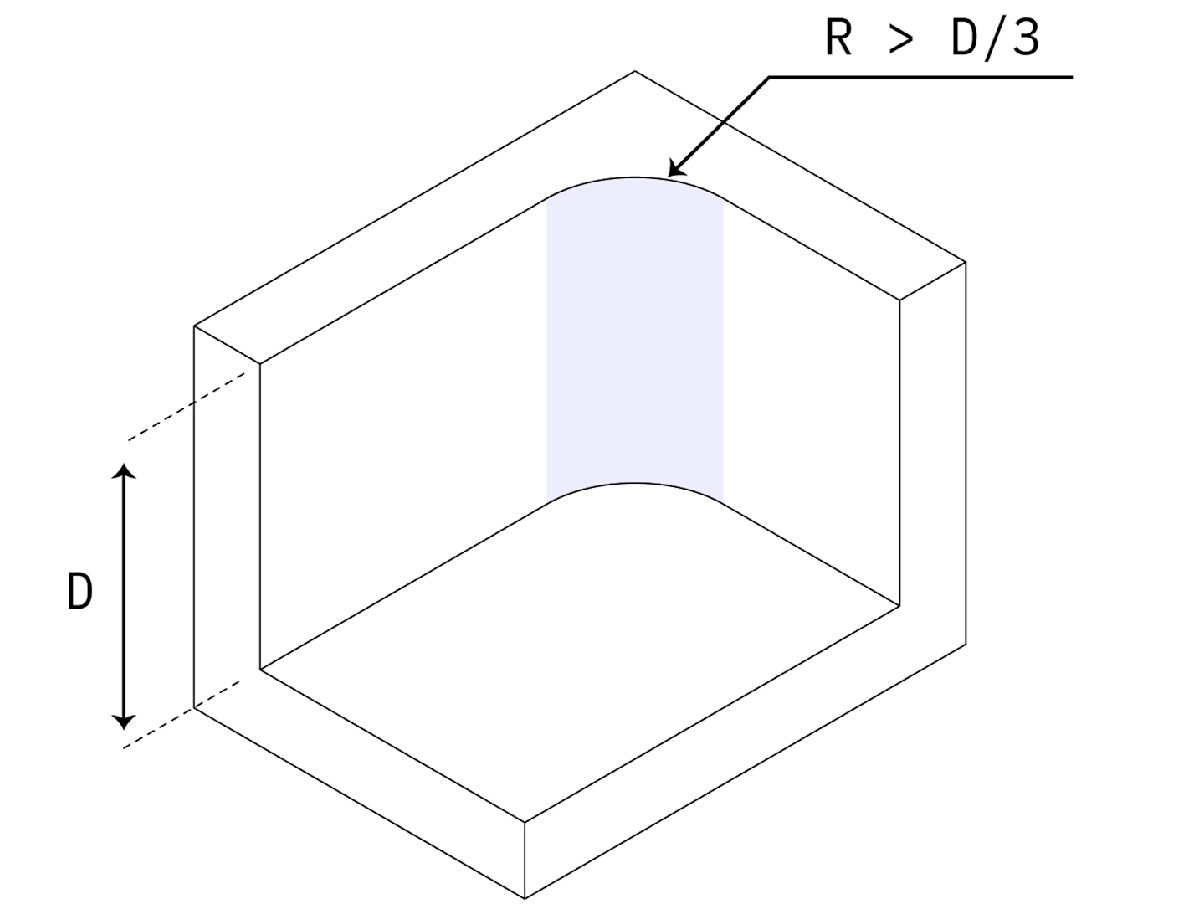
Internal edges
Recommended: larger than ⅓ x pocket depth
For internal vertical edges, the larger the fillet the better.
Edges on the floor of a pocket should be either sharp or have a 0.1 mm or 1 mm radius.
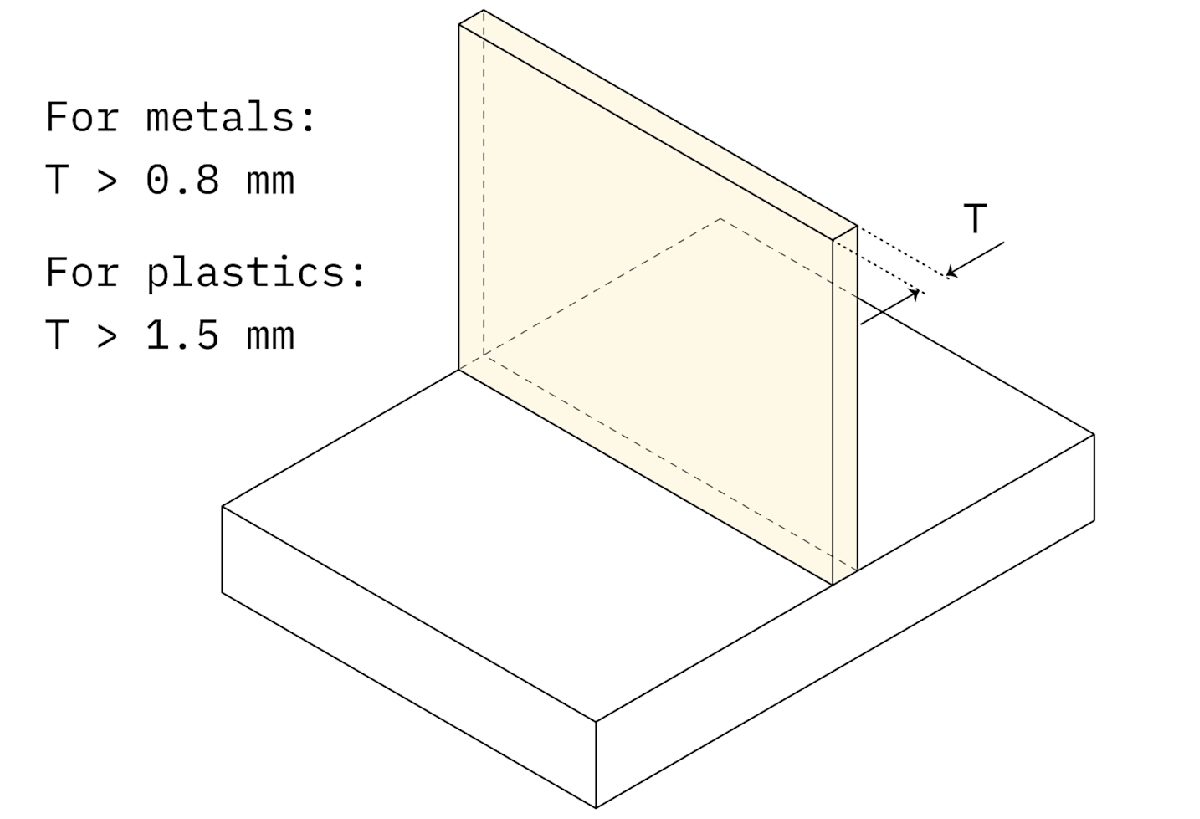
Minimum wall thickness
Recommended: 0.8 mm (for metals)
Feasible: 0.5 mm
Recommended: 1.5 mm (for plastics)
Feasible depending on the plastic: 1.0 mm
Decreasing the wall thickness reduces the stiffness of the workpiece, increasing vibrations and lowering the achievable tolerances. Plastics are especially prone to warping and thermal softening, so a larger minimum wall thickness is necessary.
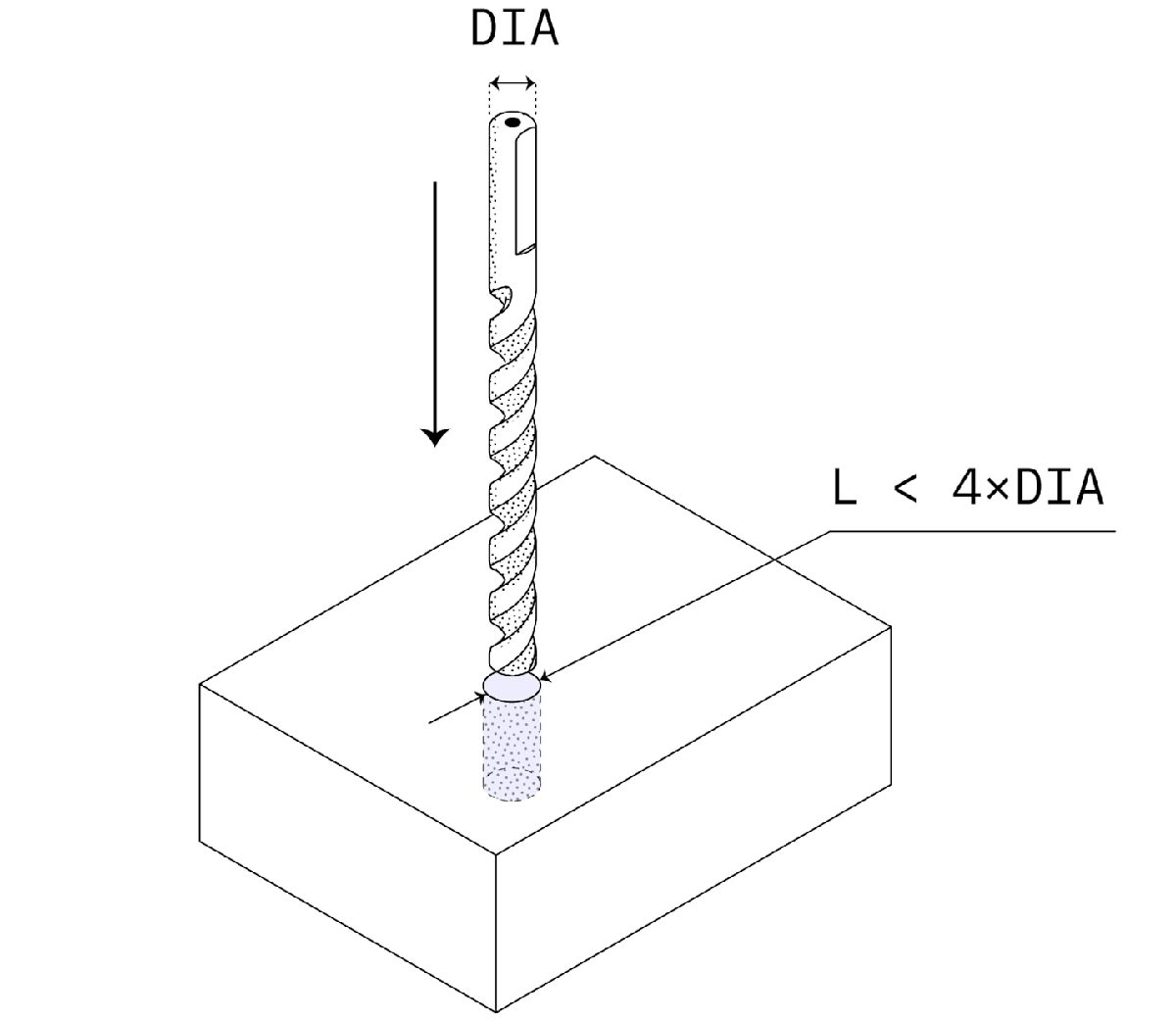
Holes
Recommended diameter: standard drill bit sizes
Recommended depth: 4 x nominal diameter
Maximum depth: 6 x nominal diameter
Holes with standard diameter are preferred, as they can be machined with a standard drill bit. Blind holes machined with a drill will have a conical floor. Holes with non-standard diameter will be machined with an end mill tool and should be treated as cavities (see previous rule). Blind holes machined with an end mill tool will be flat.
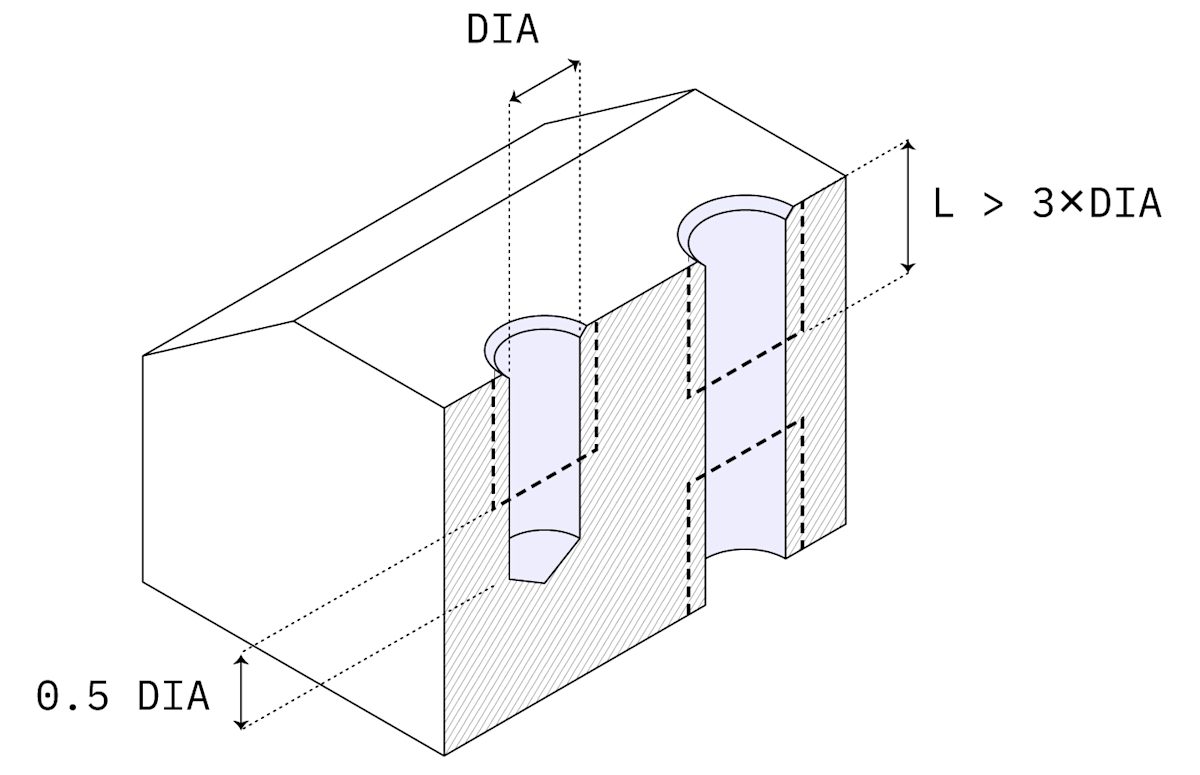
Threads
Recommended length: 3x nominal diameter Recommended size: M6 or larger Feasible size: M2
Choose the largest thread possible, as these are easier to machine. Threads longer than 3 times the nominal diameter are unusable.
Tall features
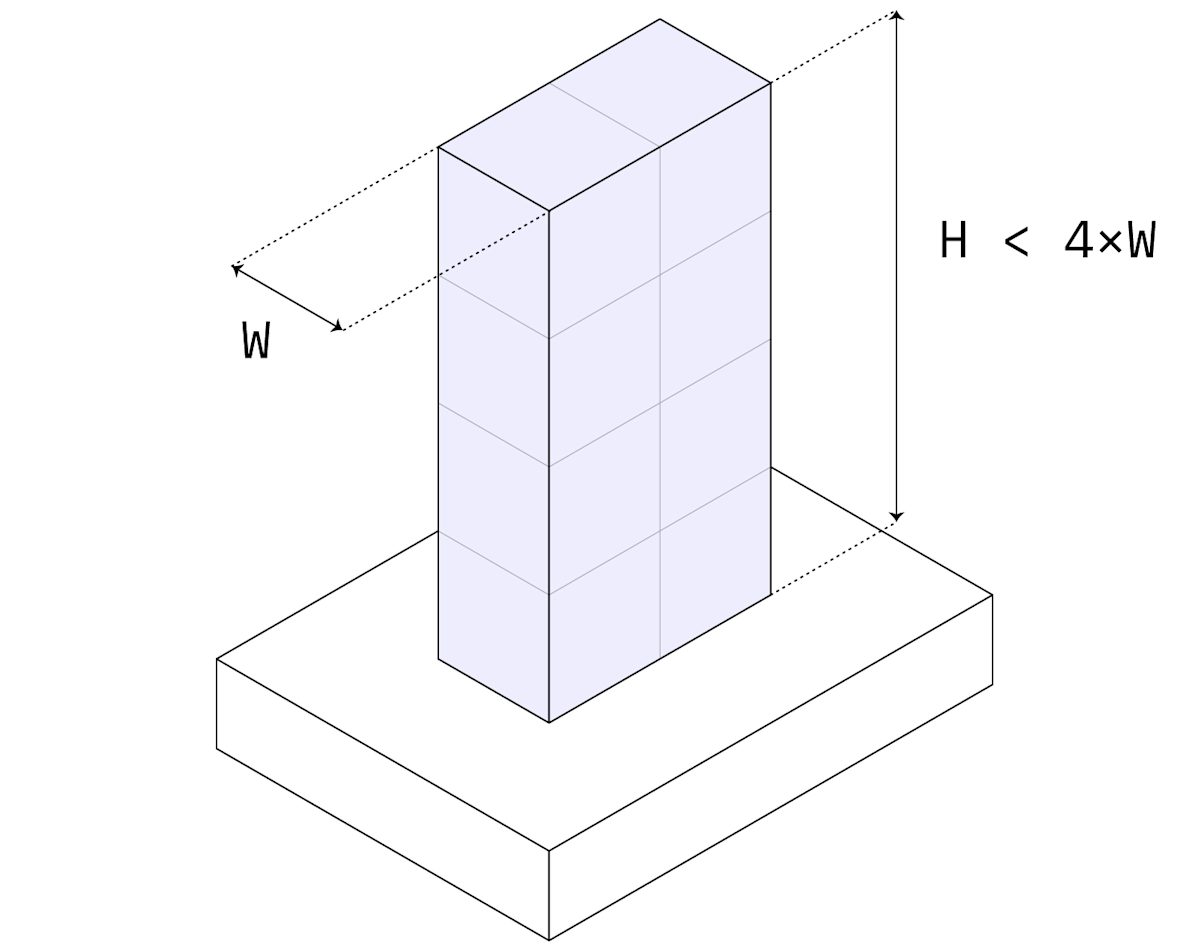
The recommended maximum ratio is height / width is < 4. Tall features are difficult to machine accurately, as these are prone to vibrations. Consider the overall geometry of the part: rotating the part by 90 degrees during machining changes the aspect ratio.
Small features
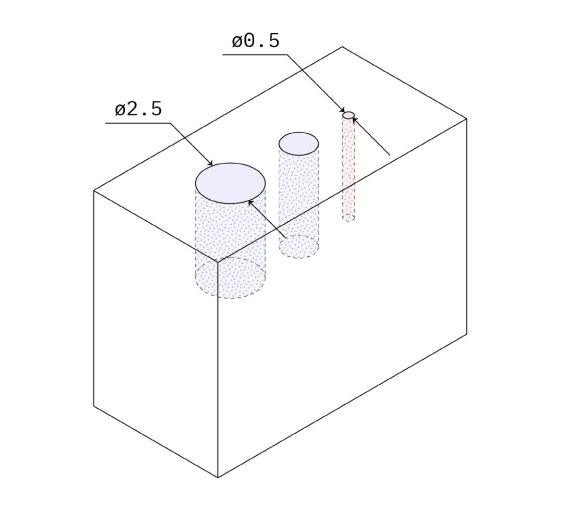
Recommended: 2.5 mm (0.100’')
Feasible: 0.50 mm (.020’’)
Cavities and holes down to 2.5 mm (0.1’’) can be CNC machined with standard cutting tools. Anything below this limit is considered micro-machining and must be avoided unless necessary.
Tolerances
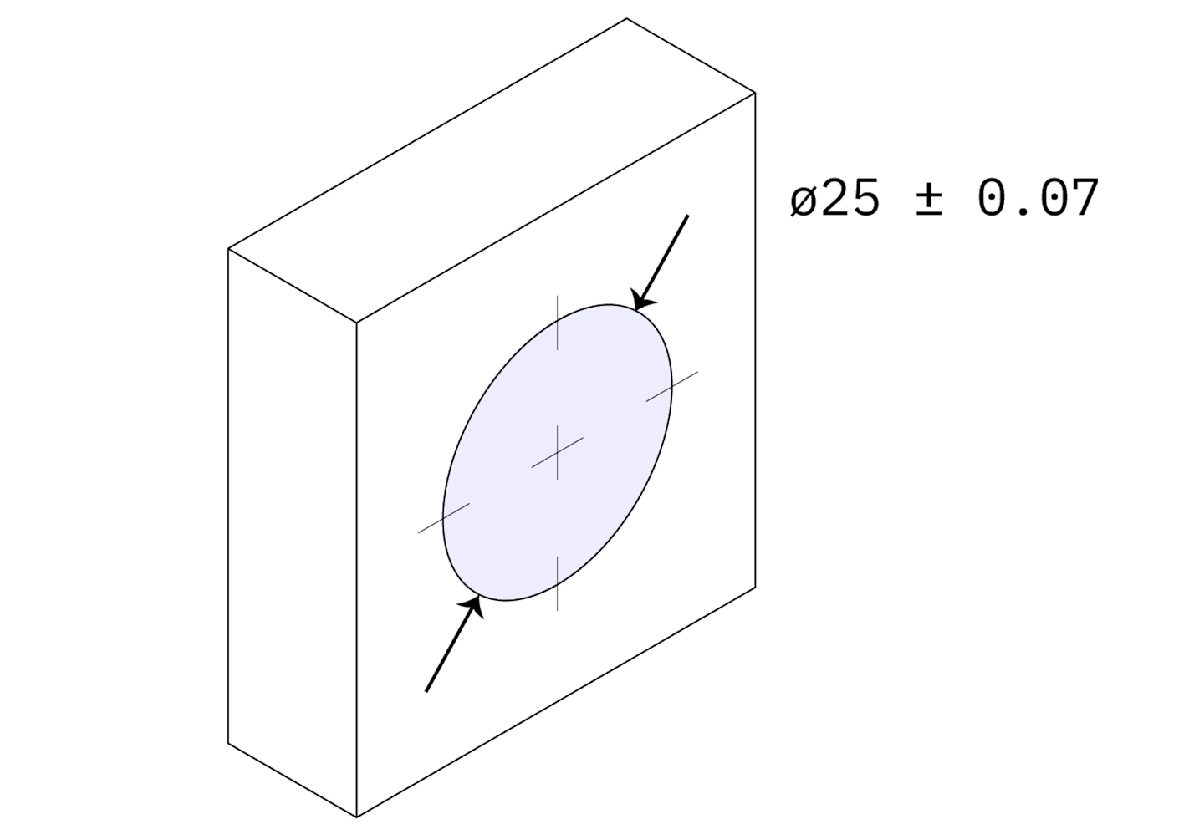
Standard: ± 0.125 mm (.005’’) Feasible: ± 0.025 mm (.001’’)
Tolerances (unilateral, bilateral, interference or geometric) should be defined on all critical features, but do not over-tolerance. If no tolerance is specified in the technical drawing, then the standard ± 0.125 mm will be held.
Maximum part size
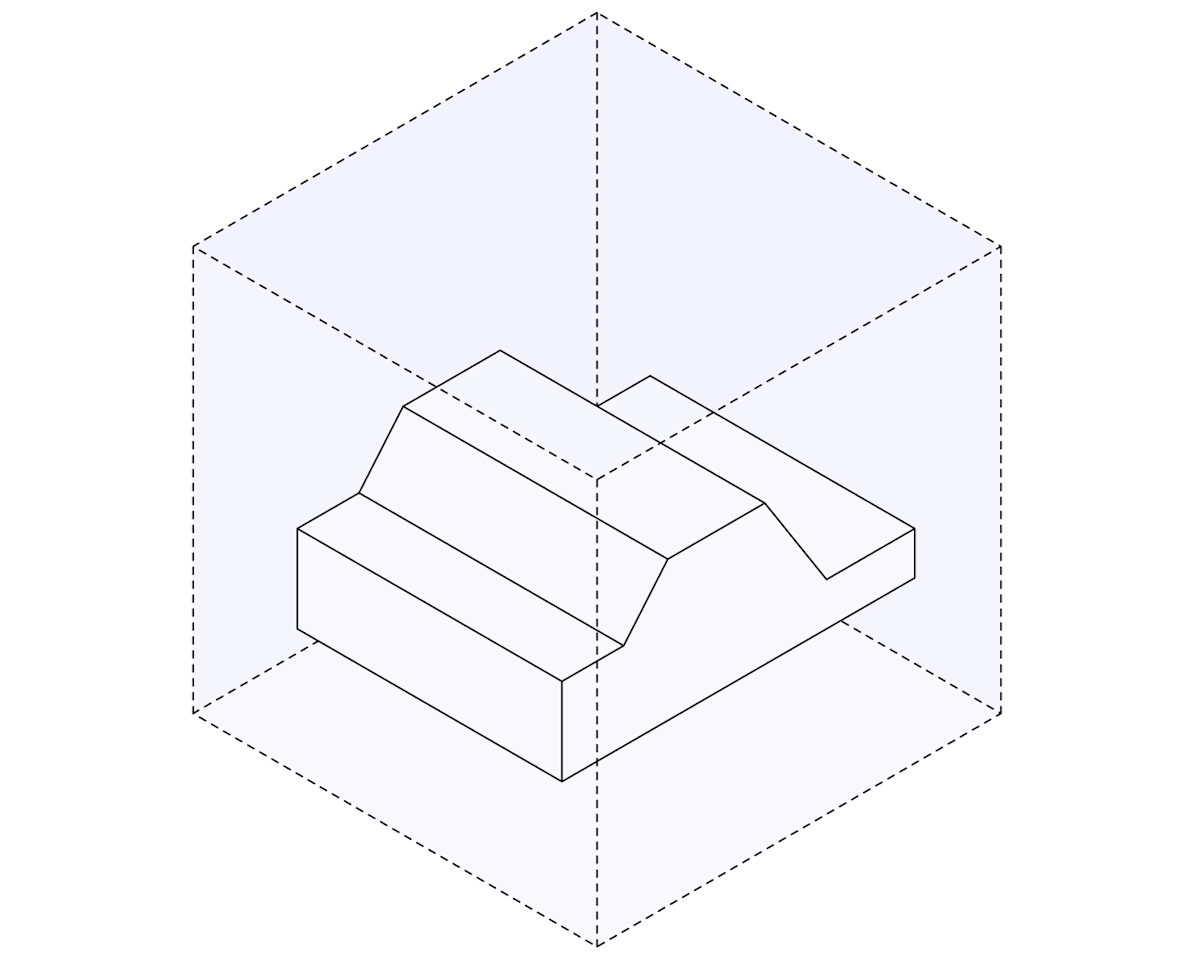
CNC milling: 400 x 250 x 150 mm (typically) CNC turning: Ø 500 mm x 1000 mm (typically)
Very large CNC machines can produce parts with dimensions up to 2000 x 800 x 1000 mm (78’’ x 32’’ x 40’’).
Five-axis CNC machining systems typically have a smaller build volume.
Designing undercuts
Undercuts are features that cannot be machined with standard tools, regardless of how the part is rotated, because the cutting tools cannot access all surfaces. If square aluminum extrusions were manufactured with CNC machining, then their grooves would be considered undercuts. Undercuts can be machined using special T-shaped, V-shaped or lollipop-shaped cutting tools if designed correctly.
Here are some practical guidelines to help you get started with designing undercuts.
Undercut dimensions
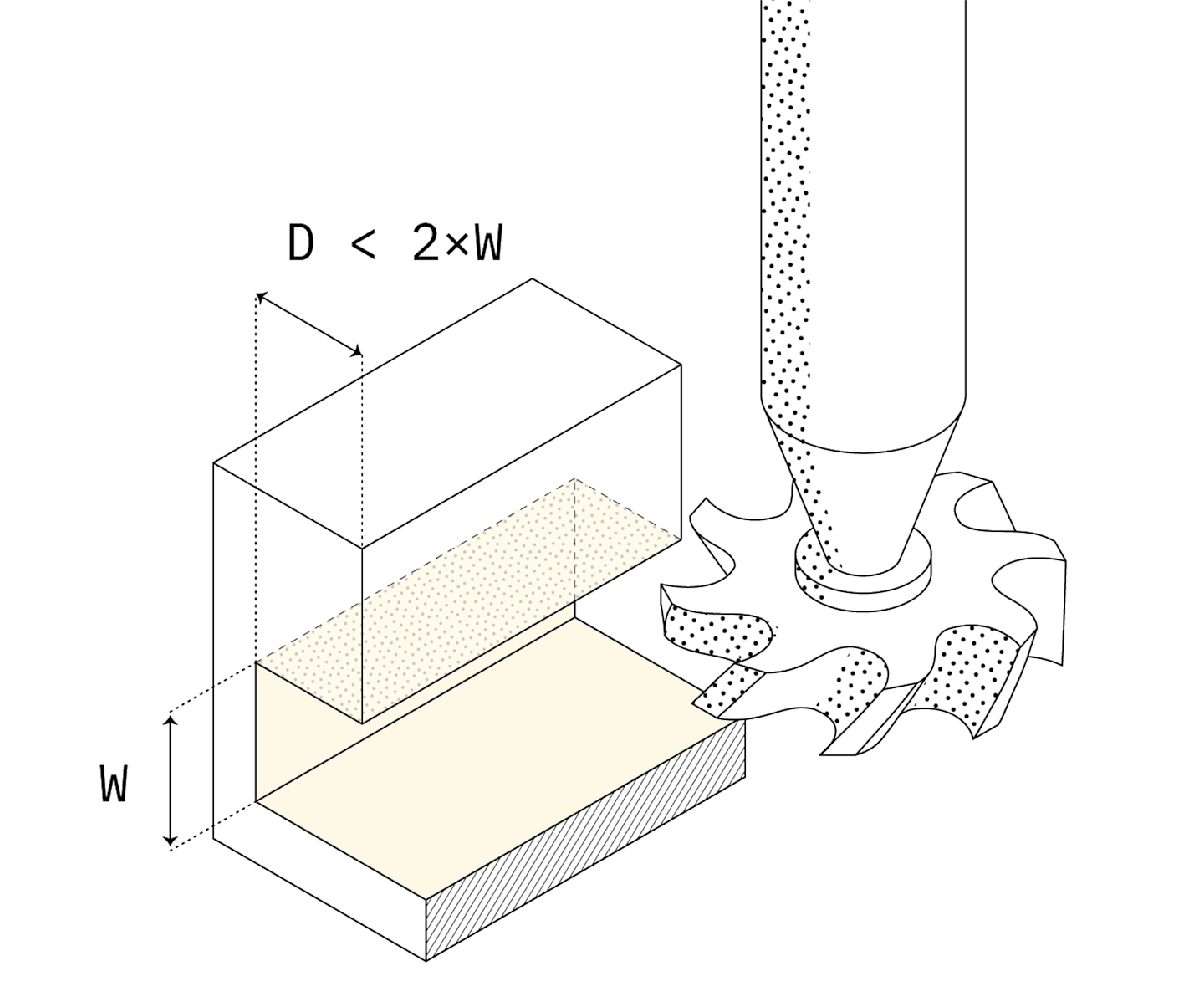
Recommended width: 3 mm (1/8’’) to 40 mm (1 ½’’) Maximum depth: 2x width. Design undercuts with a width of whole mm increments or a standard inch fraction. For undercuts with non-standard dimensions, a custom cutting tool must be created.
The standard tools have a cutting depth of approximately two times their width. This limits the possible depth.
Undercut clearance
Recommended min. clearance: 4x depth. For undercuts on internal faces, add enough clearance between the opposing walls to ensure tool access.

Part 3
Materials for CNC machining
CNC machining can be used with a very wide range of engineering metals & plastics.
In this section, you will learn more about the key characteristics of the most popular materials. We will also examine the most common finishes that are applied to CNC machined parts.
Material choices
Selecting the right material is a crucial step in the design process. The most optimal material option depends on your specific use case and requirements.
Since almost every material with sufficient hardness can be machined, CNC offers a very large range of material options to choose from. For engineering applications, metals and plastics are the most relevant and will be the focus of this section. Surface finishes can also alter the properties of CNC machined parts, and we will examine these below.
Metals
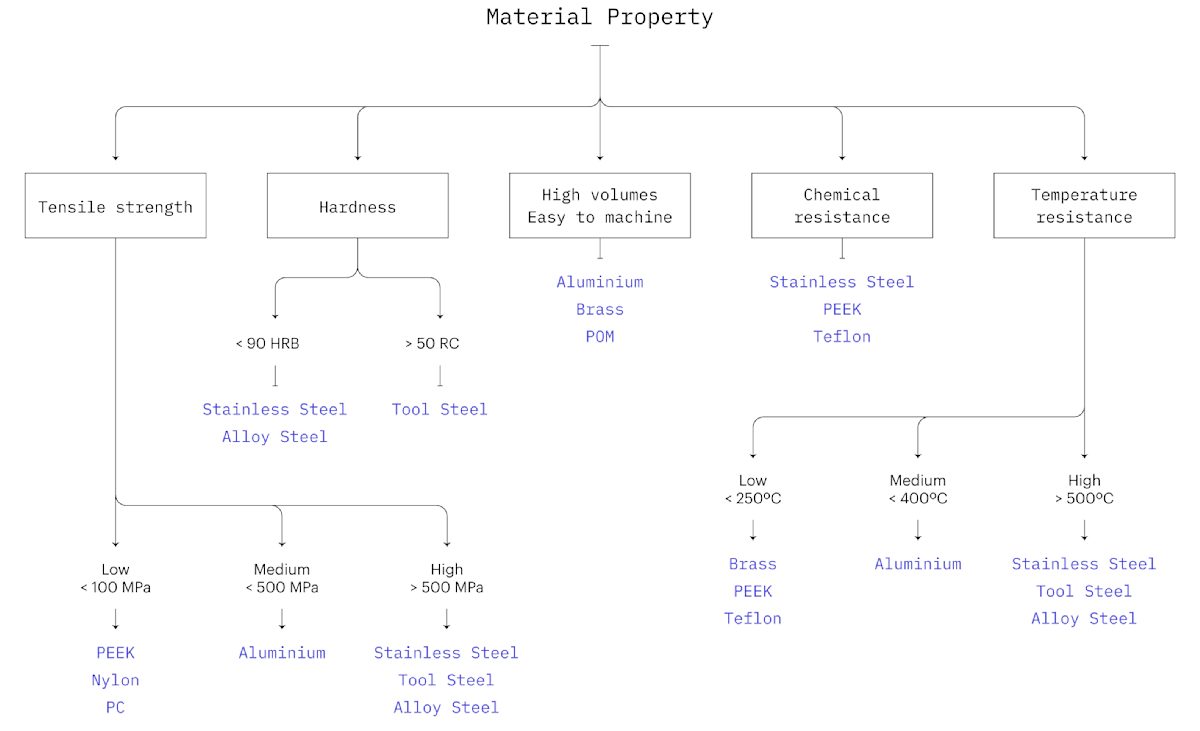
CNC machining is primarily used with metals and metal alloys. Metal can be used for both the manufacturing of custom one-off parts and prototypes and for low-to-medium batch production. Aluminum 6061 is by far the most used material in CNC machining.
Plastics
Plastics are lightweight materials with a wide range of physical properties. They are often used for their chemical resistance and electrical insulation properties. Plastics are commonly CNC machined for prototyping purposes prior to Injection Molding.
Surface finishes
Surface finishes are applied after machining and can change the appearance, surface roughness, hardness and chemical resistance of the produced parts. You can find a summary below of the most common finishes for CNC.
Explore the full range of finishes available on Protolabs Network →
As-machined
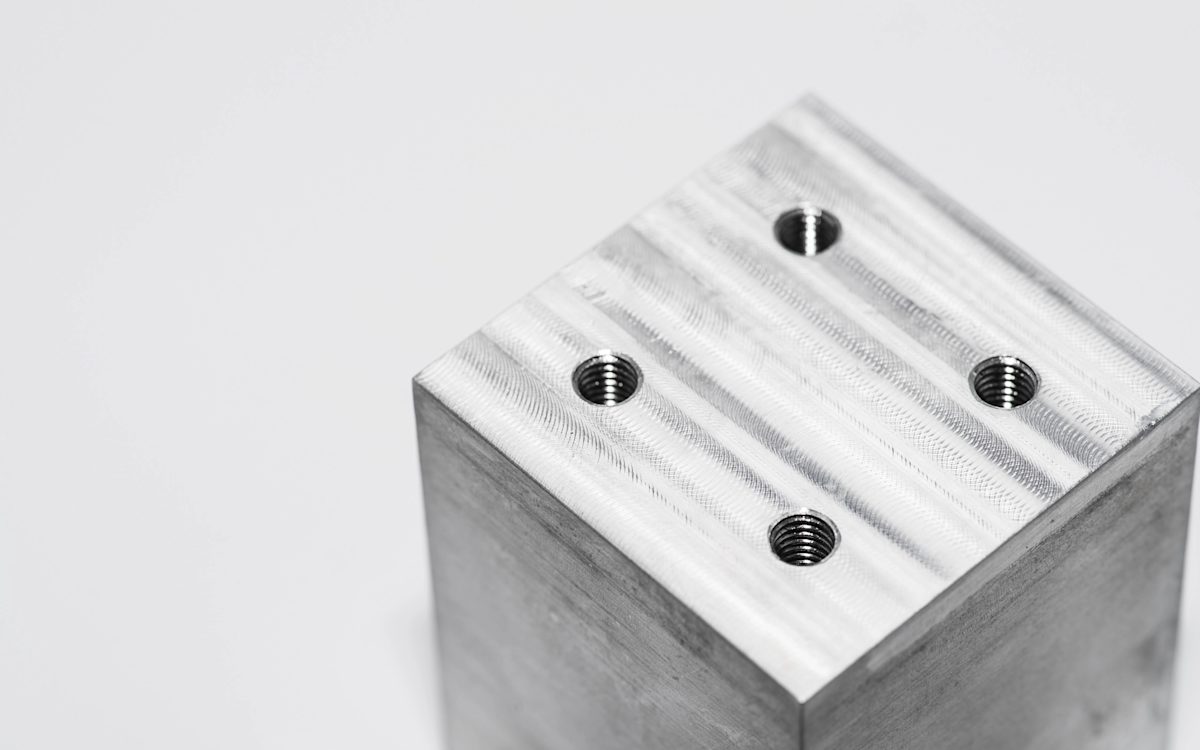
As-machined parts have the tightest tolerances, as no extra operations are performed on them. Marks following the path of the cutting tool are still visible.
The standard surface roughness of as-machined parts is 3.2 μm (125 μin) and can be reduced down to 0.4 μm (16 μin) with further operations.
Bead blasting
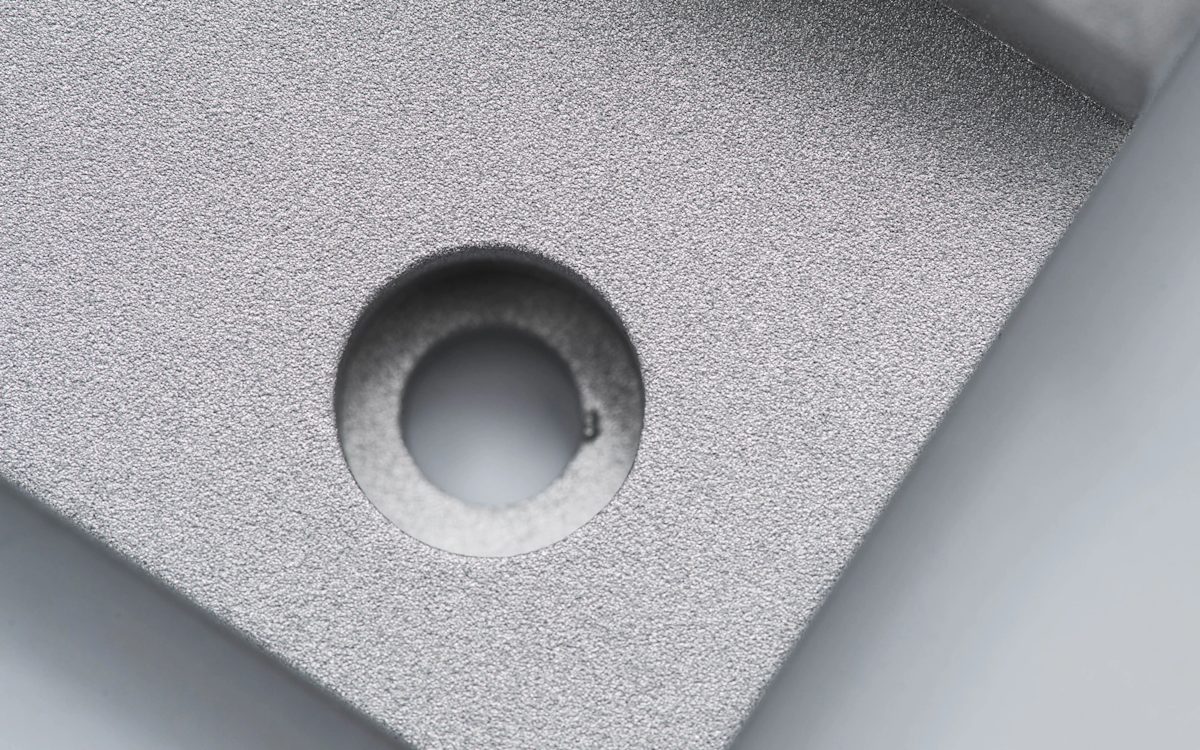
Bead blasting adds a uniform matte or satin surface finish on a machined part, removing all tool marks. Bead blasting is primarily used for aesthetic purposes, as the resulting surface roughness is not guaranteed. Critical surfaces or features (like holes) can be masked to avoid any dimensional change.
Extra cost: $
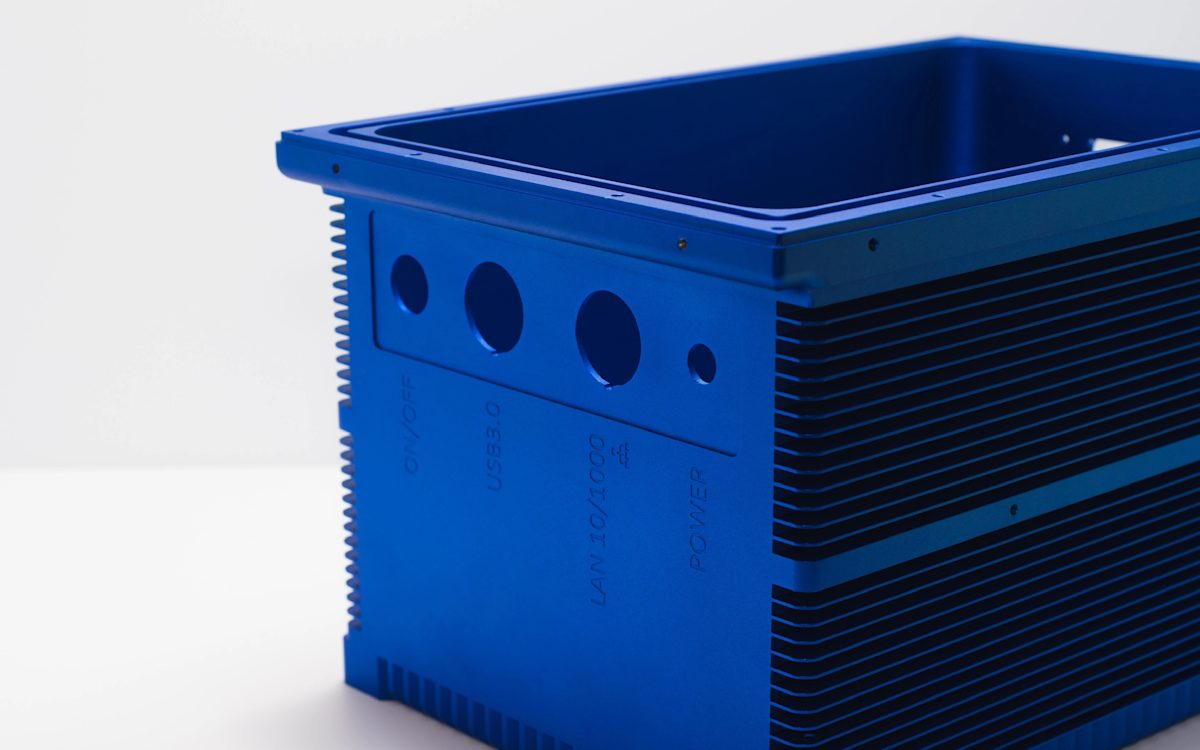
Anodizing (clear or colored)
Critical areas can be masked to retain their tight tolerances. Anodized parts can be dyed producing a smooth aesthetically pleasing surface.
Cost: $$
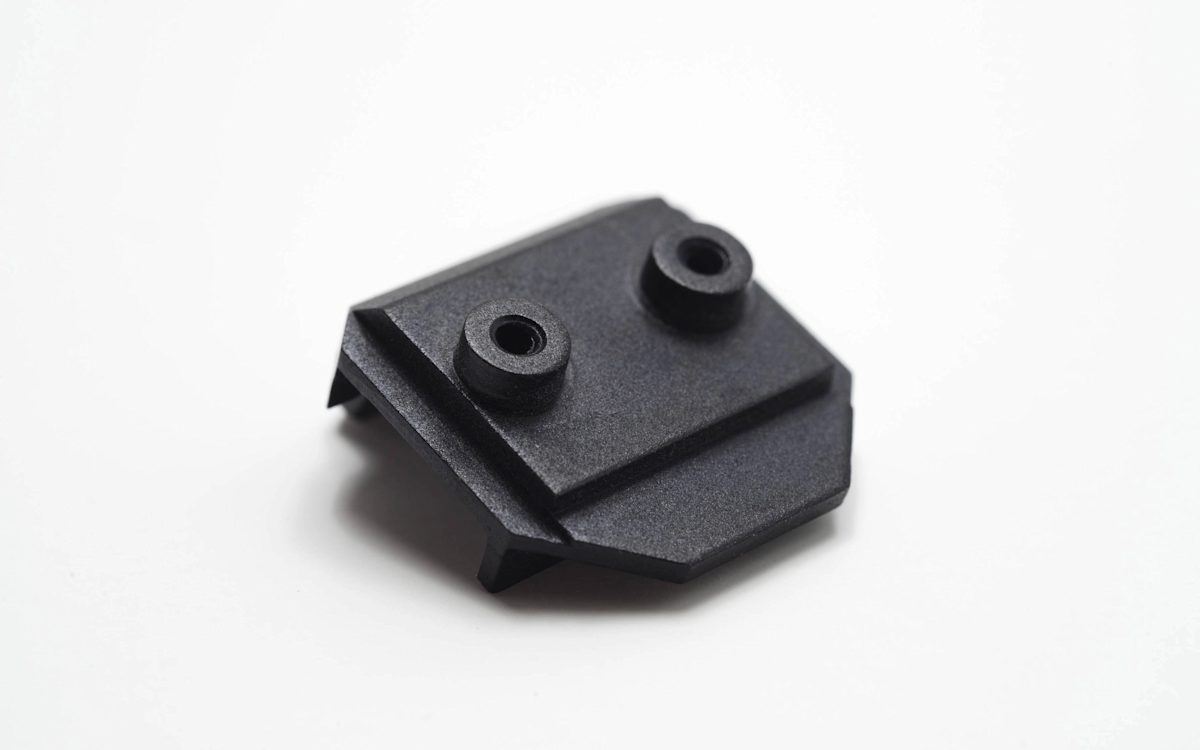
Hardcoat anodizing
Hardcoat anodizing produces a thicker, high-density coating that provides excellent corrosion and wear resistance. Hardcoat anodizing is suitable for functional applications. Critical areas can be masked to retain their tight tolerances.
Extra cost: $$$
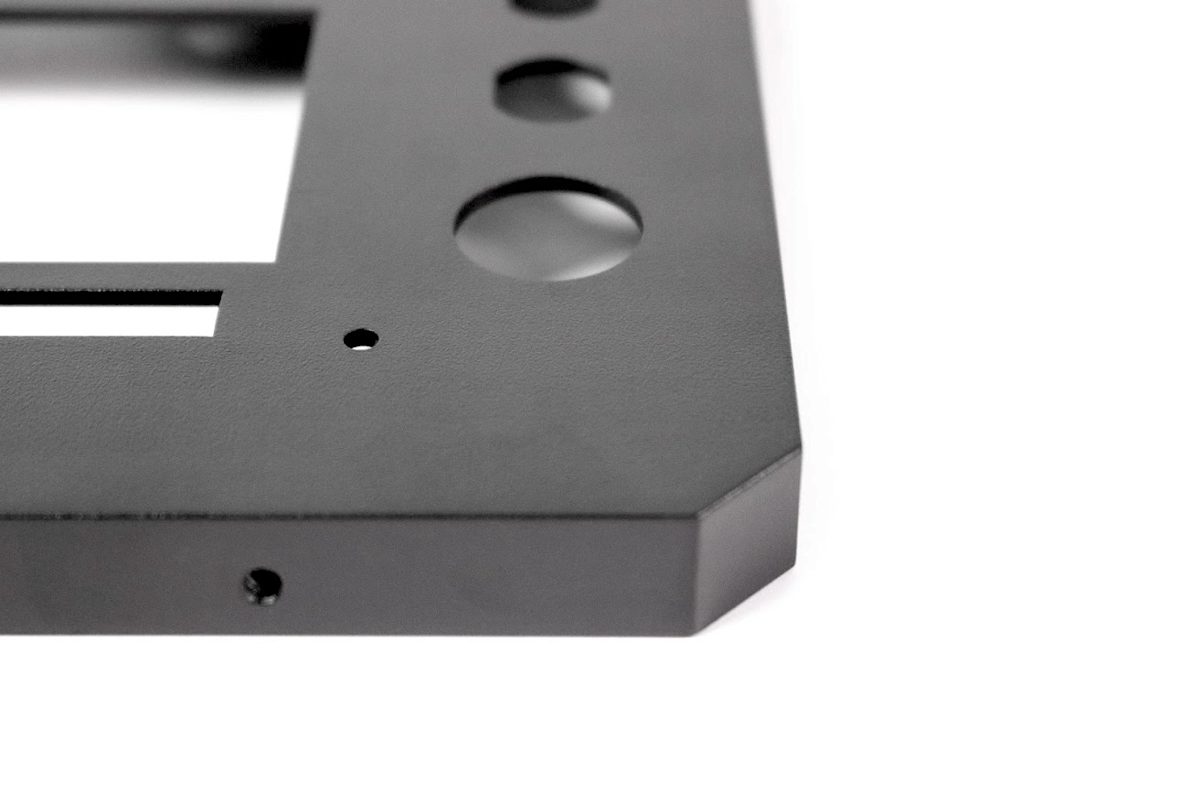
Powder coating
Powder coating adds a thin layer of strong, wear and corrosion resistant protective polymer paint on the surface of a part.
It can be applied to parts of any material and is available in many colors.
Extra cost: $$
Silk screening
Silk screening is an inexpensive way to print text or logos on the surface of CNC machined parts for aesthetic purposes. It can also be used in addition to other finishes (for example, anodizing). The print can be applied only to the external surfaces of a part.
Extra cost: $
Part 4
Cost reduction tips
Learn more about what affects the costs in CNC machining. Use these three actionable design tips to cut the price in half and you keep your project on budget.
Tips to keep your CNC project on budget
The cost of CNC machined parts depends on the following:
- Machining time and model complexity: The more complex the geometry of a part is, the longer it takes to machine and the more expensive it will be.
- Design-for-manufacturing and administrative costs: These costs are associated with CAD file preparation and process planning. While they can have a significant impact on smaller production runs, they are generally fixed costs. As production volume increases, the unit cost can be reduced through economies of scale.
- Material costs and finishes: The cost of the raw material and the ease with which it can be machined have a major impact on the overall manufacturing cost. Difficult-to-machine materials, such as Inconel, increase machining time, tool wear, and production risk, making remakes especially costly for both the manufacturer and the customer. Surface finishing requirements can also add significant cost, particularly for high-performance or precision components.
As a rule of thumb:
To minimize the cost of CNC machined parts, stick to designs with simple geometries and standardized features.
In the next sections, we re-examine some of the design rules we visited previously with cost-reduction in mind. With these 3 design tips, you can drastically reduce the cost of your CNC machined parts.
Learn 11 more tips to further reduce the cost of your CNC parts →
Tip #1: Increase the size of all fillets or add undercuts to sharp edges
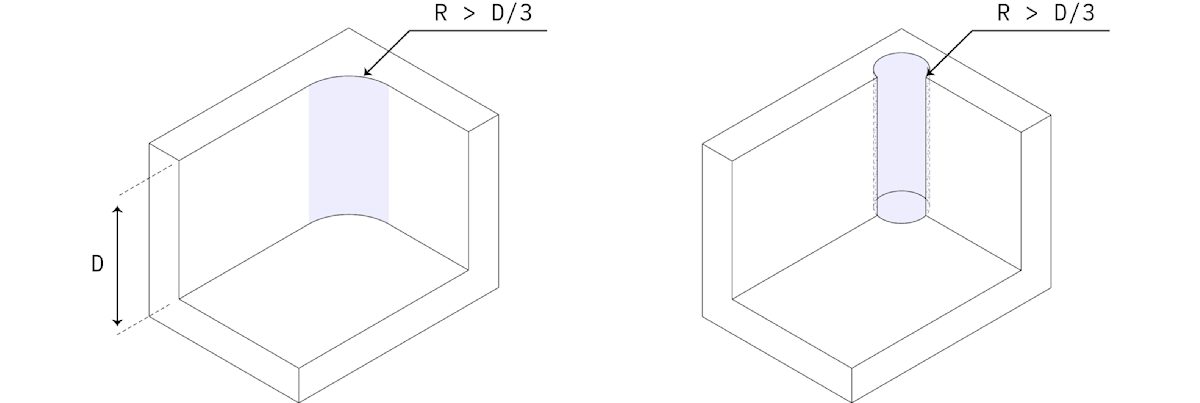
To reduce machining times, add a fillet that is as large as possible to all internal (and external) vertical edges. This way a larger tool can be used, removing more material with each cut and a circular toolpath can be followed, cutting each corner at a higher speed.
To minimize cost:
- Add a radius that is slightly larger than 1/3 of the depth of the pocket
- Add a small fillet to external edges
- Use undercuts when a 90° internal corner is required
Pro tip: Use the same radius for all edges to save time on tool changes.
Tip #2: Minimize the number of machine orientations
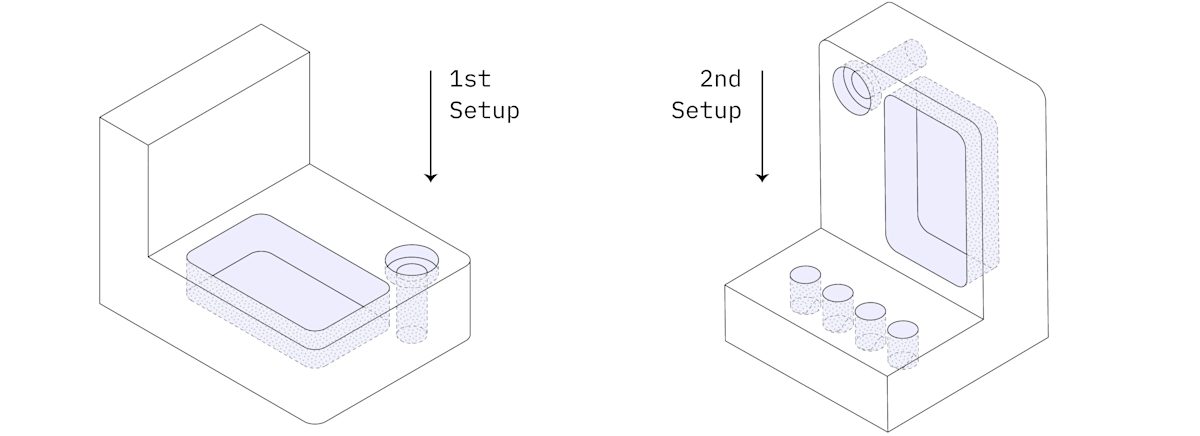
The part above requires at least two machine setups in a three-axis CNC mill. After the features on one side are machined, the workpiece is rotated manually. This requires manual labor increasing costs.
Alternatively, multi-axis CNC machines can be used. This also increases the machining costs though by about 60 to 100%.
To minimize cost:
- Design parts that can be machined in one or two setups in a 3-axis CNC mill.
- If this is not possible, consider splitting the part into multiple geometries that can be machined in one setup and assembled later.
Tip #3: Consider the cost of the material
Here is a table that summarizes the cost of the same part CNC machined in some of the most common materials. Each dollar sign indicates approximately a 25% price increase.
| Cost | Metals | Cost | Plastics |
|---|---|---|---|
| $ | Aluminum 6061 | $ | POM (Delrin) |
| $$ | Alloy steel 4140 | $$$ | ABS |
| $$ | Aluminum 7075 | $$$ | Nylon (PA 6) |
| $$$ | Brass C360 | $$$ | Polycarbonate (PC) |
| $$$$ | Stainless steel 304 | $$$$ | PEEK |
Selecting a material with physical properties that surpass the requirements of your application can quickly and unnecessarily increase the cost of your CNC machined parts.
To minimize cost:
- Select the material with the lowest cost that has properties that fulfil your design requirements.
- Use online instant quoting to get quick feedback on the price of each material.
Part 5
Start CNC machining
With your parts designed and optimized for CNC machining, it is time to start thinking about manufacturing. In this section, we walk you through the 3 simple steps needed to manufacture custom parts with CNC machining.
Step 1: Export your design to a CNC-compatible CAD file format
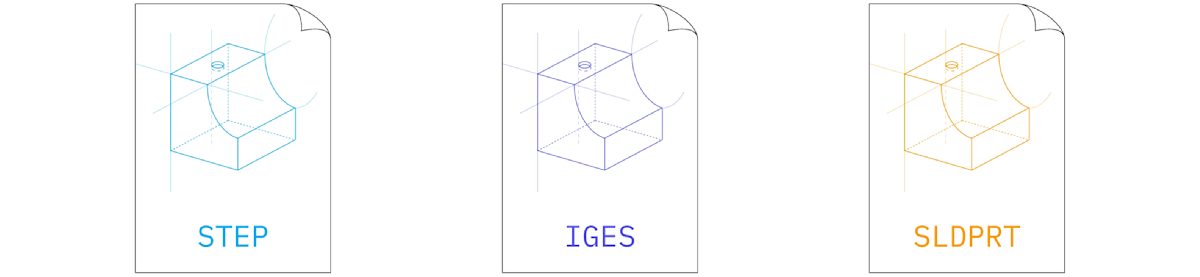
The file formats predominantly used in CNC machining are STEP and IGES. These formats are open-source, standardized and can be used across platforms.
For best results:
Export your designs directly from your native CAD software into the STEP file format.
You can upload files and get a quote for file formats used in your native CAD software, including SLDPRT, 3DM, IPT, SAT and X_T.
Step 2: Prepare a technical drawing

A technical drawing is required in the following situations:
- When feature tolerances are required
- For masking, plugging or other finish coating
Learn how to correctly prepare a technical drawing for CNC →
Step 3: Get an instant quote & start manufacturing
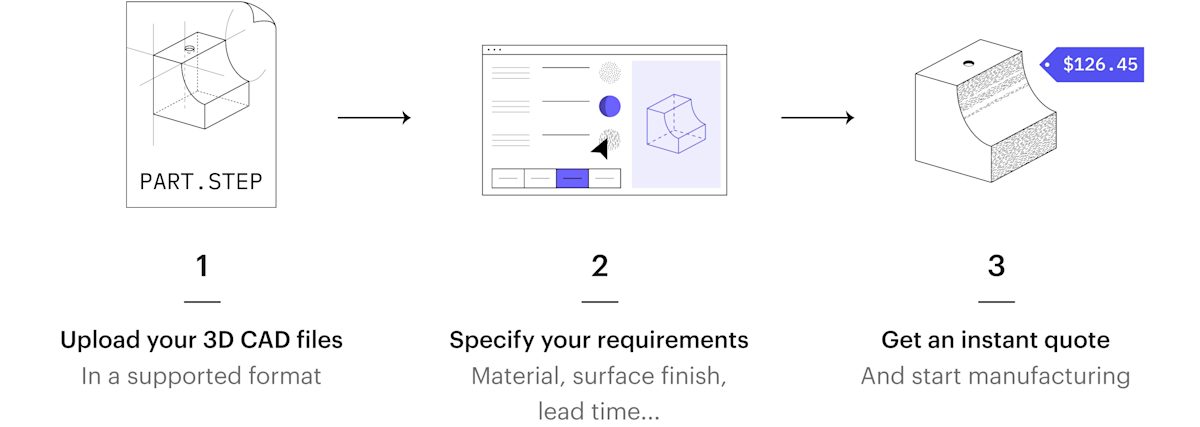
With Protolabs Network, outsourcing parts for CNC machining is easy, fast and highly price-competitive.
By combining a network of manufacturing services with our smart sourcing engine, you can instantly access readily available production capacity for the best possible quotes and lead times.
When you upload your parts to Protolabs Network, our automated Design for Machinability analysis will detect any potential design issues before production begins and will give you an instant quote, based on our machine learning algorithm.
This way you can be sure that you always receive the best price in the market at the fastest turnaround times for your CNC machining parts!
Part 6
Useful resources
In this guide we touched upon all you need to get you started with CNC machining. But there is plenty more to learn.
Below we list the best and most useful resources on CNC machining and other digital manufacturing technologies for those who want to delve deeper.
Knowledge Base
In this guide, we outlined all you need to get you started with creating custom parts with CNC machining.
In this guide, we covered everything you need to get started with creating custom parts with CNC machining. There’s still plenty more to explore in our Knowledge Base: a curated collection of technical articles on manufacturing technologies.
Here’s a selection of articles about CNC machining:
Learn to machine
Interested in gaining hands-on experience with CNC machining? There are several ways to learn how to operate a CNC mill or CNC lathe.
-
Find resources online: There are many valuable online resources to help you develop your CNC machining skills. Titans of CNC Academy and NYCCNC are two of the best places to start.
-
Apply for an apprenticeship: Apprenticeships are one of the best ways to launch a career as a CNC machinist. They are often offered by established machine shops and universities.
Guides to other Manufacturing Technologies
Want to learn more about Digital Manufacturing? There are more technologies to explore:
FAQs about CNC machining
CNC stands for Computer Numerical Control. It refers to the automated control of machining tools using a computer. A digital CAD design is converted into G-code and M-code, which tell the machine exactly how to move and operate to create a physical part with high precision.
CNC machining costs depend on material choice, part complexity and production volume. While there is an initial setup cost for programming and tooling, the cost per unit drops as you increase the volume. Optimize designs to reduce machining time, which is a primary driver of the final price.
CNC precision machining is the process of removing material from a workpiece to create a component with very tight tolerances. By using advanced software and closed-loop feedback systems, it can produce parts that are accurate down to a few microns, meeting the strict requirements of aerospace and medical industries.
Movement depends on the machine type. In CNC milling, the cutting tool typically moves across multiple axes (X, Y and Z) to carve the part. In CNC turning, the workpiece rotates at high speeds while a stationary tool cuts it. Five-axis machines allow both the tool and part to move simultaneously.