

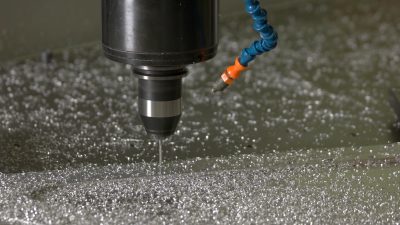
Use these conversion tables of standard drill bit sizes (metric, fractional inch and wire gauge) that are widely used in CNC machining to reduce manufacturing costs from custom tooling.
Understanding the differences between metric, fractional, and wire gauge sizes
Drill bit sizes are typically defined using three systems: metric, fractional inch and wire gauge. Each system has its own advantages depending on the application, required precision and regional standards.
Metric sizes are the global standard for engineering and manufacturing. Because these are decimal-based and easy to interpret, they are widely used across modern CNC machining workflows and international supply chains. For most engineering applications, metric sizes are the clearest and most consistent choice.
Fractional inch sizes are still widely used in North America and remain common for applications involving imperial hardware and certain fastener standards. If your design needs to match imperial threads or fasteners, it can be helpful to reference related thread types for manufacturing when choosing the most suitable drill size.
Wire gauge sizes are designed for high precision in very small diameters. They are commonly used in electronics, PCB-related work and fine mechanical applications where small step changes in diameter matter. In these cases, tighter control over hole size can also affect part quality and should be considered alongside CNC tolerances and finishes.
Understanding the differences between these sizing systems helps you to select the right reference table based on your specific project requirements or regional standards. If you’re optimizing a part for cost-effective production, it’s usually best to start with standard sizes and follow proven design for manufacturability guidelines for CNC machining.
Drill bit size charts
The three tables below provide standard, fractional inch and wire gauge drill bit sizes. It's helpful and often essential to match these standard sizes when designing CNC parts with drill holes. If you design holes that don't fit into these ranges, you may need specialized tooling to manufacture your parts.
Want to learn more about CNC machining?
Standard metric drill bit sizes
| Drill size | Diameter (in) |
|---|---|
| 0.05 mm | 0.0020 |
| 0.1 mm | 0.0039 |
| 0.2 mm | 0.0079 |
| 0.3 mm | 0.0118 |
| 0.4 mm | 0.0158 |
| 0.5 mm | 0.0197 |
| 0.6 mm | 0.0236 |
| 0.7 mm | 0.0276 |
| 0.8 mm | 0.0315 |
| 0.9 mm | 0.0354 |
| 1 mm | 0.0394 |
| 1.1 mm | 0.0433 |
| 1.2 mm | 0.0472 |
| 1.3 mm | 0.0512 |
| 1.4 mm | 0.0551 |
| 1.5 mm | 0.0591 |
| 1.6 mm | 0.0630 |
| 1.7 mm | 0.0669 |
| 1.8 mm | 0.0709 |
| 1.9 mm | 0.0748 |
| 2 mm | 0.0787 |
| 2.1 mm | 0.0827 |
| 2.2 mm | 0.0866 |
| 2.3 mm | 0.0906 |
| 2.4 mm | 0.0945 |
| 2.5 mm | 0.0984 |
| 2.6 mm | 0.1024 |
| 2.7 mm | 0.1063 |
| 2.8 mm | 0.1102 |
| 2.9 mm | 0.1142 |
| 3 mm | 0.1181 |
| 3.1 mm | 0.1221 |
| 3.2 mm | 0.1260 |
| 3.3 mm | 0.1299 |
| 3.4 mm | 0.1339 |
| 3.5 mm | 0.1378 |
| 3.6 mm | 0.1417 |
| 3.7 mm | 0.1457 |
| 3.8 mm | 0.1496 |
| 3.9 mm | 0.1535 |
| 4 mm | 0.1575 |
| 4.1 mm | 0.1614 |
| 4.2 mm | 0.1654 |
| 4.3 mm | 0.1693 |
| 4.4 mm | 0.1732 |
| 4.5 mm | 0.1772 |
| 4.6 mm | 0.1811 |
| 4.7 mm | 0.1850 |
| 4.8 mm | 0.1890 |
| 4.9 mm | 0.1929 |
| 5 mm | 0.1969 |
| 5.1 mm | 0.2008 |
| 5.2 mm | 0.2047 |
| 5.3 mm | 0.2087 |
| 5.4 mm | 0.2126 |
| 5.5 mm | 0.2165 |
| 5.6 mm | 0.2205 |
| 5.7 mm | 0.2244 |
| 5.8 mm | 0.2284 |
| 5.9 mm | 0.2323 |
| 6 mm | 0.2362 |
| 6.1 mm | 0.2402 |
| 6.2 mm | 0.2441 |
| 6.3 mm | 0.2480 |
| 6.4 mm | 0.2520 |
| 6.5 mm | 0.2559 |
| 6.6 mm | 0.2598 |
| 6.7 mm | 0.2638 |
| 6.8 mm | 0.2677 |
| 6.9 mm | 0.2717 |
| 7 mm | 0.2756 |
| 7.1 mm | 0.2795 |
| 7.2 mm | 0.2835 |
| 7.3 mm | 0.2874 |
| 7.4 mm | 0.2913 |
| 7.5 mm | 0.2953 |
| 7.6 mm | 0.2992 |
| 7.7 mm | 0.3032 |
| 7.8 mm | 0.3071 |
| 7.9 mm | 0.3110 |
| 8 mm | 0.3150 |
| 8.1 mm | 0.3189 |
| 8.2 mm | 0.3228 |
| 8.3 mm | 0.3268 |
| 8.4 mm | 0.3307 |
| 8.5 mm | 0.3347 |
| 8.6 mm | 0.3386 |
| 8.7 mm | 0.3425 |
| 8.8 mm | 0.3465 |
| 8.9 mm | 0.3504 |
| 9 mm | 0.3543 |
| 9.1 mm | 0.3583 |
| 9.2 mm | 0.3622 |
| 9.3 mm | 0.3661 |
| 9.4 mm | 0.3701 |
| 9.5 mm | 0.3740 |
| 9.6 mm | 0.3780 |
| 9.7 mm | 0.3819 |
| 9.8 mm | 0.3858 |
| 9.9 mm | 0.3898 |
| 10 mm | 0.3937 |
| 10.5 mm | 0.4134 |
| 11 mm | 0.4331 |
| 11.5 mm | 0.4528 |
| 12 mm | 0.4724 |
| 12.5 mm | 0.4921 |
| 13 mm | 0.5118 |
| 13.5 mm | 0.5315 |
| 14 mm | 0.5512 |
| 14.5 mm | 0.5709 |
| 15 mm | 0.5906 |
| 15.5 mm | 0.6102 |
| 16 mm | 0.6299 |
| 16.5 mm | 0.6496 |
| 17 mm | 0.6693 |
| 17.5 mm | 0.6890 |
| 18 mm | 0.7087 |
| 18.5 mm | 0.7284 |
| 19 mm | 0.7480 |
| 19.5 mm | 0.7677 |
| 20 mm | 0.7874 |
| 20.5 mm | 0.8071 |
| 21 mm | 0.8268 |
| 21.5 mm | 0.8465 |
| 22 mm | 0.8661 |
| 22.5 mm | 0.8858 |
| 23 mm | 0.9055 |
| 23.5 mm | 0.9252 |
| 24 mm | 0.9449 |
| 24.5 mm | 0.9646 |
| 25 mm | 0.9843 |
| 25.5 mm | 1.0039 |
| 26 mm | 1.0236 |
| 26.5 mm | 1.0433 |
| 27 mm | 1.0630 |
| 27.5 mm | 1.0827 |
| 28 mm | 1.1024 |
| 28.5 mm | 1.1221 |
| 29 mm | 1.1417 |
| 29.5 mm | 1.1614 |
| 30 mm | 1.1811 |
| 30.5 mm | 1.2008 |
| 31 mm | 1.2205 |
| 31.5 mm | 1.2402 |
| 32 mm | 1.2598 |
| 32.5 mm | 1.2795 |
| 33 mm | 1.2992 |
| 33.5 mm | 1.3189 |
| 34 mm | 1.3386 |
| 34.5 mm | 1.3583 |
| 35 mm | 1.3780 |
| 35.5 mm | 1.3976 |
| 36 mm | 1.4173 |
| 36.5 mm | 1.4370 |
| 37 mm | 1.4567 |
| 37.5 mm | 1.4764 |
| 38 mm | 1.4961 |
Want to learn more about CNC machining?
Clearance hole guide for metric fasteners
When designing components for CNC machining, it’s often necessary to create clearance holes for bolts and screws. A clearance hole is intentionally made slightly larger than the fastener’s nominal diameter so that the bolt can pass freely through the material without engaging threads.
Choosing the correct clearance hole size is important for proper assembly and alignment as it helps to avoid unnecessary friction or interference during installation. This is especially relevant when following best practices for designing parts for CNC machining, where standard hole sizes improve manufacturability and reduce costs.
Below is a quick reference guide for common metric fasteners and their typical clearance hole sizes:
| Fastener size | Nominal diameter (mm) | Recommended clearance hole (mm) |
|---|---|---|
| M4 | 4.0 | 4.2 – 4.4 |
| M5 | 5.0 | 5.2 – 5.4 |
| M6 | 6.0 | 6.2 – 6.6 |
| M8 | 8.0 | 8.4 – 9.0 |
| M10 | 10.0 | 10.5 – 11.0 |
Clearance holes are often categorized as close, normal, or loose fit, depending on how much tolerance is required for assembly. For high-precision applications, tighter fits may be preferred, while looser fits are useful when alignment is less critical or when parts need to be assembled quickly.
Selecting standard clearance sizes not only simplifies assembly but also ensures compatibility with widely available tooling, helping you to avoid custom drills and reduce overall production costs.
Fractional inch drill bit sizes
| Drill size | Diameter (in) | Diameter (mm) |
|---|---|---|
| 1/64 in | 0.0156 | 0.3969 |
| 1/32 in | 0.0313 | 0.7938 |
| 3/64 in | 0.0469 | 1.1906 |
| 1/16 in | 0.0625 | 1.5875 |
| 5/64 in | 0.0781 | 1.9844 |
| 3/32 in | 0.0938 | 2.3813 |
| 7/64 in | 0.1094 | 2.7781 |
| 1/8 in | 0.1250 | 3.1750 |
| 9/64 in | 0.1406 | 3.5719 |
| 5/32 in | 0.1563 | 3.9688 |
| 11/64 in | 0.1719 | 4.3656 |
| 3/16 in | 0.1875 | 4.7625 |
| 13/64 in | 0.2031 | 5.1594 |
| 7/32 in | 0.2188 | 5.5563 |
| 15/64 in | 0.2344 | 5.9531 |
| 1/4 in | 0.2500 | 6.3500 |
| 17/64 in | 0.2656 | 6.7469 |
| 9/32 in | 0.2813 | 7.1438 |
| 19/64 in | 0.2969 | 7.5406 |
| 5/16 in | 0.3125 | 7.9375 |
| 21/64 in | 0.3281 | 8.3344 |
| 11/32 in | 0.3438 | 8.7313 |
| 23/64 in | 0.3594 | 9.1281 |
| 3/8 in | 0.3750 | 9.5250 |
| 25/64 in | 0.3906 | 9.9219 |
| 13/32 in | 0.4063 | 10.3188 |
| 27/64 in | 0.4219 | 10.7156 |
| 7/16 in | 0.4375 | 11.1125 |
| 29/64 in | 0.4531 | 11.5094 |
| 15/32 in | 0.4688 | 11.9063 |
| 31/64 in | 0.4844 | 12.3031 |
| 1/2 in | 0.5000 | 12.7000 |
| 33/64 in | 0.5156 | 13.0969 |
| 17/32 in | 0.5313 | 13.4938 |
| 35/64 in | 0.5469 | 13.8906 |
| 9/16 in | 0.5625 | 14.2875 |
| 37/64 in | 0.5781 | 14.6844 |
| 19/32 in | 0.5938 | 15.0813 |
| 39/64 in | 0.6094 | 15.4781 |
| 5/8 in | 0.6250 | 15.8750 |
| 41/64 in | 0.6406 | 16.2719 |
| 43/64 in | 0.6719 | 17.0656 |
| 11/16 in | 0.6875 | 17.4625 |
| 45/64 in | 0.7031 | 17.8594 |
| 23/32 in | 0.7188 | 18.2563 |
| 47/64 in | 0.7344 | 18.6531 |
| 3/4 in | 0.7500 | 19.0500 |
| 49/64 in | 0.7656 | 19.4469 |
| 25/32 in | 0.7813 | 19.8438 |
| 51/64 in | 0.7969 | 20.2406 |
| 13/16 in | 0.8125 | 20.6375 |
| 53/64 in | 0.8281 | 21.0344 |
| 27/32 in | 0.8438 | 21.4313 |
| 55/64 in | 0.8594 | 21.8281 |
| 7/8 in | 0.8750 | 22.2250 |
| 57/64 in | 0.8906 | 22.6219 |
| 29/32 in | 0.9063 | 23.0188 |
| 21/23 in | 0.9130 | 23.1913 |
| 59/64 in | 0.9219 | 23.4156 |
| 15/16 in | 0.9375 | 23.8125 |
| 61/64 in | 0.9531 | 24.2094 |
| 31/32 in | 0.9688 | 24.6063 |
| 63/64 in | 0.9844 | 25.0031 |
| 1 in | 1.0000 | 25.4000 |
| 1 1/64 in | 1.0156 | 25.7969 |
| 1 1/32 in | 1.0313 | 26.1938 |
| 1 3/64 in | 1.0469 | 26.5906 |
| 1 1/16 in | 1.0625 | 26.9875 |
| 1 5/64 in | 1.0781 | 27.3844 |
| 1 3/32 in | 1.0938 | 27.7813 |
| 1 7/64 in | 1.1094 | 28.1781 |
| 1 1/8 in | 1.1250 | 28.5750 |
| 1 9/64 in | 1.1406 | 28.9719 |
| 1 5/32 in | 1.1563 | 29.3688 |
| 1 11/64 in | 1.1719 | 29.7656 |
| 1 3/16 in | 1.1875 | 30.1625 |
| 1 13/64 in | 1.2031 | 30.5594 |
| 1 7/32 in | 1.2188 | 30.9563 |
| 1 15/64 in | 1.2344 | 31.3531 |
| 1 1/4 in | 1.2500 | 31.7500 |
| 1 17/64 in | 1.2656 | 32.1469 |
| 1 9/32 in | 1.2813 | 32.5438 |
| 1 19/64 in | 1.2969 | 32.9406 |
| 1 5/16 in | 1.3125 | 33.3375 |
| 1 21/64 in | 1.3281 | 33.7344 |
| 1 11/32 in | 1.3438 | 34.1313 |
| 1 23/64 in | 1.3594 | 34.5281 |
| 1 3/8 in | 1.3750 | 34.9250 |
| 1 25/64 in | 1.3906 | 35.3219 |
| 1 13/32 in | 1.4063 | 35.7188 |
| 1 27/64 in | 1.4219 | 36.1156 |
| 1 7/16 in | 1.4375 | 36.5125 |
| 1 29/64 in | 1.4531 | 36.9094 |
| 1 15/32 in | 1.4688 | 37.3063 |
| 1 31/64 in | 1.4844 | 37.7031 |
| 1 1/2 in | 1.5000 | 38.1000 |
Ready to produce complex, custom parts for your project?
Wire gauge drill bit sizes
| Drill size | Diameter (in) | Diameter (mm) |
|---|---|---|
| #107 | 0.0019 | 0.0483 |
| #106 | 0.0023 | 0.0584 |
| #105 | 0.0027 | 0.0686 |
| #104 | 0.0031 | 0.0787 |
| #103 | 0.0035 | 0.0889 |
| #102 | 0.0039 | 0.0991 |
| #101 | 0.0043 | 0.1092 |
| #100 | 0.0047 | 0.1194 |
| #99 | 0.0051 | 0.1295 |
| #98 | 0.0055 | 0.1397 |
| #97 | 0.0059 | 0.1499 |
| #96 | 0.0063 | 0.1600 |
| #95 | 0.0067 | 0.1702 |
| #94 | 0.0071 | 0.1803 |
| #93 | 0.0075 | 0.1905 |
| #92 | 0.0079 | 0.2007 |
| #91 | 0.0083 | 0.2108 |
| #90 | 0.0087 | 0.2210 |
| #89 | 0.0091 | 0.2311 |
| #88 | 0.0095 | 0.2413 |
| #87 | 0.0100 | 0.2540 |
| #86 | 0.0105 | 0.2667 |
| #85 | 0.0110 | 0.2794 |
| #84 | 0.0115 | 0.2921 |
| #83 | 0.0120 | 0.3048 |
| #82 | 0.0125 | 0.3175 |
| #81 | 0.0130 | 0.3302 |
| #80 | 0.0135 | 0.3429 |
| #79 | 0.0145 | 0.3680 |
| #78 | 0.0160 | 0.4064 |
| #77 | 0.0180 | 0.4572 |
| #76 | 0.0200 | 0.5080 |
| #75 | 0.0210 | 0.5334 |
| #74 | 0.0225 | 0.5715 |
| #73 | 0.0240 | 0.6096 |
| #72 | 0.0250 | 0.6350 |
| #71 | 0.0260 | 0.6604 |
| #70 | 0.0280 | 0.7112 |
| #69 | 0.0292 | 0.7417 |
| #68 | 0.0310 | 0.7874 |
| #67 | 0.0320 | 0.8128 |
| #66 | 0.0330 | 0.8382 |
| #65 | 0.0350 | 0.8890 |
| #64 | 0.0360 | 0.9144 |
| #63 | 0.0370 | 0.9398 |
| #62 | 0.0380 | 0.9652 |
| #61 | 0.0390 | 0.9906 |
| #60 | 0.0400 | 1.0160 |
| #59 | 0.0410 | 1.0414 |
| #58 | 0.0420 | 1.0668 |
| #57 | 0.0430 | 1.0922 |
| #56 | 0.0465 | 1.1811 |
| #55 | 0.0520 | 1.3208 |
| #54 | 0.0550 | 1.3970 |
| #53 | 0.0595 | 1.5113 |
| #52 | 0.0635 | 1.6129 |
| #51 | 0.0670 | 1.7018 |
| #50 | 0.0700 | 1.7780 |
| #49 | 0.0730 | 1.8542 |
| #48 | 0.0760 | 1.9304 |
| #47 | 0.0785 | 1.9939 |
| #46 | 0.0810 | 2.0574 |
| #45 | 0.0820 | 2.0828 |
| #44 | 0.0860 | 2.1844 |
| #43 | 0.0890 | 2.2606 |
| #42 | 0.0935 | 2.3749 |
| #41 | 0.0960 | 2.4384 |
| #40 | 0.0980 | 2.4892 |
| #39 | 0.0995 | 2.5273 |
| #38 | 0.1015 | 2.5781 |
| #37 | 0.1040 | 2.6416 |
| #36 | 0.1065 | 2.7051 |
| #35 | 0.1100 | 2.7940 |
| #34 | 0.1110 | 2.8194 |
| #33 | 0.1130 | 2.8702 |
| #32 | 0.1160 | 2.9464 |
| #31 | 0.1200 | 3.0480 |
| #30 | 0.1285 | 3.2639 |
| #29 | 0.1360 | 3.4544 |
| #28 | 0.1405 | 3.5687 |
| #27 | 0.1440 | 3.6576 |
| #26 | 0.1470 | 3.7338 |
| #25 | 0.1495 | 3.7973 |
| #24 | 0.1520 | 3.8608 |
| #23 | 0.1540 | 3.9116 |
| #22 | 0.1570 | 3.9878 |
| #21 | 0.1590 | 4.0386 |
| #20 | 0.1610 | 4.0894 |
| #19 | 0.1660 | 4.2164 |
| #18 | 0.1695 | 4.3053 |
| #17 | 0.1730 | 4.3942 |
| #16 | 0.1770 | 4.4958 |
| #15 | 0.1800 | 4.5720 |
| #14 | 0.1820 | 4.6228 |
| #13 | 0.1850 | 4.6990 |
| #12 | 0.1890 | 4.8006 |
| #11 | 0.1910 | 4.8514 |
| #10 | 0.1935 | 4.9149 |
| #9 | 0.1960 | 4.9784 |
| #8 | 0.1990 | 5.0546 |
| #7 | 0.2010 | 5.1054 |
| #6 | 0.2040 | 5.1816 |
| #5 | 0.2055 | 5.2197 |
| #4 | 0.2090 | 5.3086 |
| #3 | 0.2130 | 5.4102 |
| #2 | 0.2210 | 5.6134 |
| #1 | 0.2280 | 5.7912 |
| A | 0.2340 | 5.9436 |
| B | 0.2380 | 6.0452 |
| C | 0.2420 | 6.1468 |
| D | 0.2460 | 6.2484 |
| E | 0.2500 | 6.3500 |
| F | 0.2570 | 6.5278 |
| G | 0.2610 | 6.6294 |
| H | 0.2660 | 6.7564 |
| I | 0.2720 | 6.9088 |
| J | 0.2770 | 7.0358 |
| K | 0.2810 | 7.1374 |
| L | 0.2900 | 7.3660 |
| M | 0.2950 | 7.4930 |
| N | 0.3020 | 7.6708 |
| O | 0.3160 | 8.0264 |
| P | 0.3230 | 8.2042 |
| Q | 0.3320 | 8.4328 |
| R | 0.3390 | 8.6106 |
| S | 0.3480 | 8.8392 |
| T | 0.3580 | 9.0932 |
| U | 0.3680 | 9.3472 |
| V | 0.3770 | 9.5758 |
| W | 0.3860 | 9.8044 |
| X | 0.3970 | 10.0838 |
| Y | 0.4040 | 10.2616 |
| Z | 0.4130 | 10.4902 |
Learn how to cut CNC machining costs by 50%
Best practices for tool longevity and hole quality
Achieving consistent hole quality while extending tool life is essential in CNC machining. By following a few practical workshop guidelines, you can reduce tool wear, improve surface finish and avoid unnecessary machining costs.
One of the most effective ways to improve tool longevity is by using cutting fluids such as oils or pastes. These help to reduce friction and heat buildup during drilling, which is particularly important when working with tougher materials. Proper lubrication not only extends tool life but also improves chip evacuation and prevents built-up edge formation.
Another key factor is selecting the correct spindle speed (RPM) and feed rate based on the material being machined. Harder materials such as stainless steel or high-tensile alloys require lower speeds and more controlled feeds to prevent excessive heat and premature tool wear. Following established CNC machining guidelines can help ensure that cutting parameters are optimized for different materials and applications.
In addition to speeds and lubrication, maintaining proper tolerances is critical for achieving high-quality holes. Excessive tool wear or incorrect parameters can lead to oversized or rough holes, which may fall outside of the acceptable limits. Reviewing standard CNC tolerances and finishes can help you to understand how machining conditions impact final part quality.
You can also improve results by designing parts with machining constraints in mind. Applying proven design for CNC machining guidelines helps to ensure that hole sizes, depths and features are optimized for standard tooling and consistent performance.
By combining proper lubrication, optimized cutting parameters and design best practices, you can significantly improve both tool longevity and the quality of drilled holes, while keeping your CNC machining processes efficient and cost-effective.
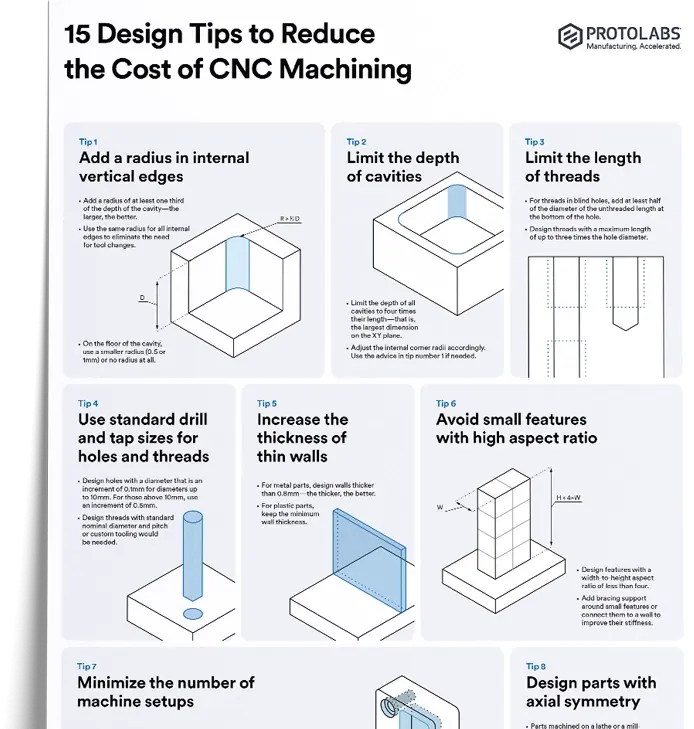
Frequently asked questions
Why does precision machining cost more?
Precision machining requires specialized equipment, high-end cutting tools, and slower feed rates to ensure high accuracy. The increased cost reflects the expert labor needed for complex setups and rigorous quality control. These investments minimize errors, ensure parts meet exact specifications and perform reliably in critical applications.
What is the difference between accuracy and precision in CNC?
Accuracy measures how close a finished part is to its intended design dimensions, whereas precision refers to the machine’s ability to repeat those same measurements consistently across multiple parts. High-quality CNC operations require both to ensure every component in a production run is identical and correct.
How does material hardness affect precision machining?
Harder materials increase tool wear and generate significant heat, which can cause thermal expansion and dimensional shifts. To maintain precision, machinists must use specialized carbide or diamond tools and adjust cutting speeds. This careful calibration prevents tool deflection and ensures the material meets tight tolerance requirements.
Why is ‘setup reduction’ critical for tight tolerances?
Every time a machinist moves a part to a new fixture, they introduce potential alignment errors. Reducing the number of setups, often through multi-axis machining, minimizes these variations. Consolidating operations ensures that features remain perfectly concentric and aligned, which is vital for maintaining the tightest possible tolerances.


